Bullstory Research June 24, 2026
SpaceX—if it were me, I would target this timing.
Key takeaways
2026year mega-IPO (SpaceX, OpenAI, Anthropic) total offering is nearing 2,000billion dollars. Musk's voting rights are 85.1%, maintaining effective control even after the listing. Because the lock-up is released in stages, the impact of insider selling is spread out, but the expansion of shares available for trading could trigger inclusion in the Nasdaq-100 and fund flows out of existing stocks.
You are already affected even if you do not participate in IPOs
I will not subscribe to SpaceX. The same goes for OpenAI. But that does not mean you can skip this article.
When three of the largest IPOs ever take place in a single year, something happens in the market. Institutions rebalance their portfolios. Nasdaq-100 ETF allocations are automatically readjusted. Funds flow out of indirect AI beneficiaries. If any of these overlap with the stocks you hold, you are within the sphere of influence regardless of whether you subscribe directly.
2026 mega-IPO 3 companies — SpaceX, OpenAI, Anthropic. We will look at what we should see through Space X's listing this time.
Why 2026is the year of mega-IPOs?
SpaceX, OpenAI, and Anthropic are pursuing listings one after another within a few months.
Having three companies clustered in a single year represents the highest concentration since the dot-com boom.
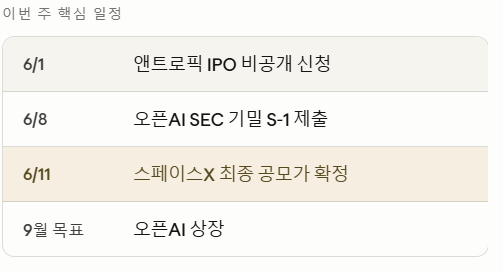
The combined public offering proceeds of the three companies are estimated to approach 2,000 billion dollars. For reference, the total proceeds raised by the entire U.S. IPO market in 2025 amounted to 450 billion dollars. The subscription funds for these three companies alone exceed 4 times the entire market total from the past year. And that is also a warning sign. When large amounts of capital flow into newly listed stocks, that capital has to come from somewhere. That 'somewhere' 는 could be the stock you are holding right now.
S-1 report, Find it here To list in the United States, a company must submit an S-1 to the SEC. It contains everything from the business model and use of funds to financial statements and risk factors. Finding it is simple. Search for the company name at efts.sec.gov or Google "company name S-1 SEC".
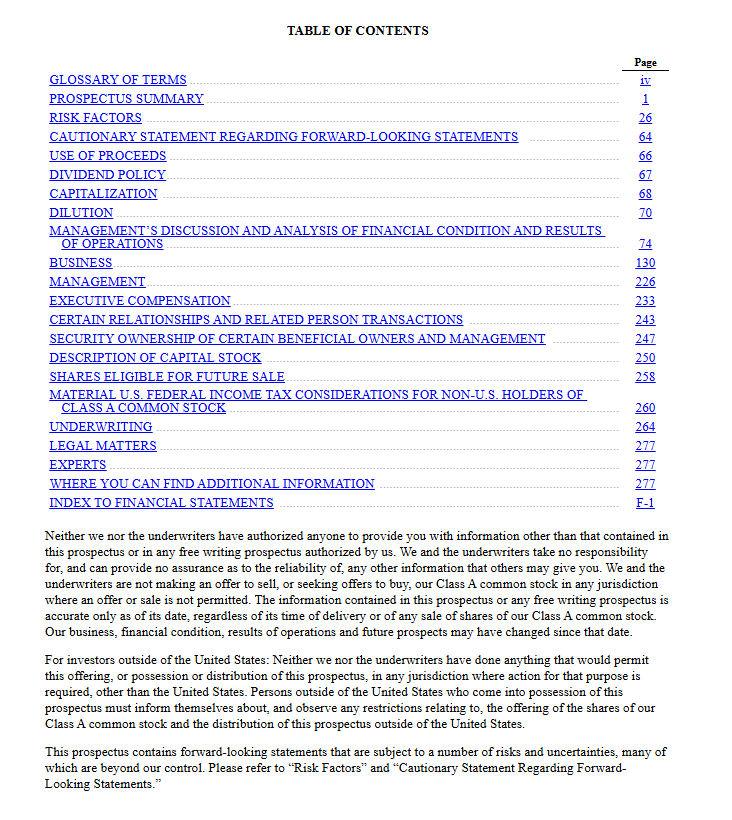
S-1 is made public is when the real analysis begins. That is when the audited financial statements are revealed for the first time, and it becomes possible to see how different they are from the figures the market has assumed so far. S-1 is a document written directly by the company and therefore tends to emphasize the favorable aspects. That is precisely why you should look at the risk factors first. The sections where the company itself writes, "These are the risks to our business," contain the most candid information.
"It’s currently in the red—is it okay to buy?" How to read an income statement
The first thing that catches the eye in an IPO filing is 게** **net loss. SpaceX has 2025year revenue of 187billion dollars and a net loss of 49OpenAI is expected to have revenue of 130billion dollars and a loss of 90billion dollars. Anyone taught that loss-making companies are always risky would stop here. But institutions first look at the type of deficit.
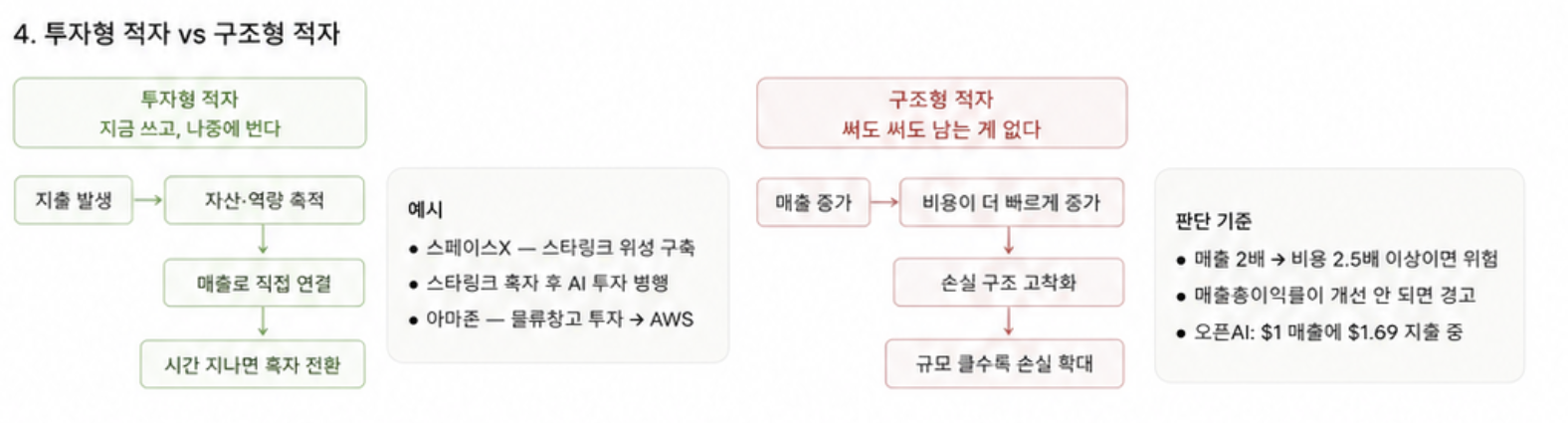
An investment-type deficit means spending money now to build a foundation for future earnings. Factories, servers, and technical personnel. Spending is substantial, but if it leads to revenue, it is investment-type. A structural deficit means that even as revenue grows, costs grow by more than that. The structure has become entrenched in which it takes 100won to generate 150won in revenue.
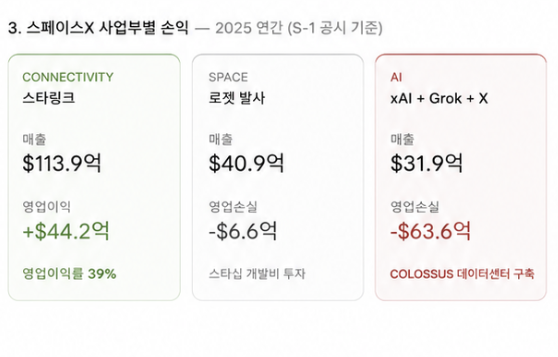
Take SpaceX as an example. Its Starlink business unit is profitable, with 2025year revenue of 1,140billion dollars and operating profit of 44billion dollars. But the AI business unit (xAI) posted a loss of 63billion 5,000million dollars, pulling down the company as a whole. A money-making business is supporting future investment.

Lock-up expiration: the day insiders start selling
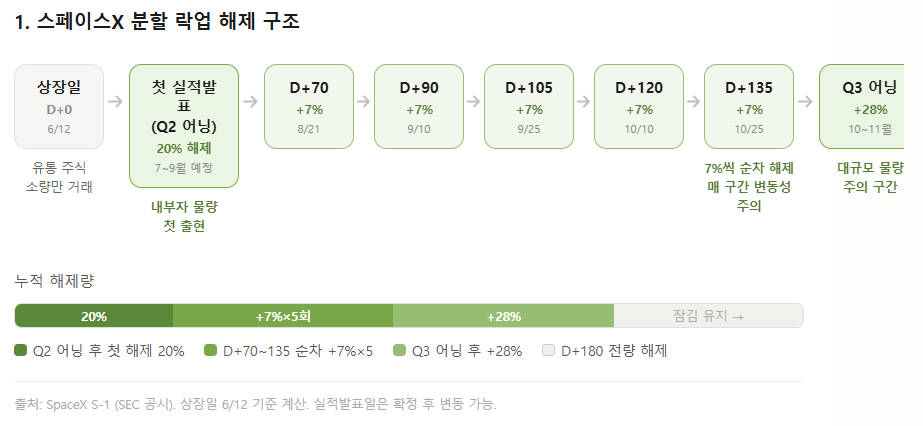
On the first day of listing, only a portion of the total shares actually enters the market. The holdings that founders, early investors, executives, and employees have accumulated over several years are still locked up. This is called a lock-up. Typically, after the listing, insiders are contractually restricted from selling their shares for 90~180 days. There is one reason this date matters to investors. The moment the lock-up is lifted, a large volume of shares that could not previously be sold may enter the market all at once. Even when a stock price appears to suddenly drop for no reason, it is often because the date was the lock-up expiration date.
SpaceX chose a structure different from a typical lock-up. It was designed to release the shares in stages so that the supply would not flood the market all at once. After the first quarterly earnings announcement, up to 20% can be sold, and thereafter sales become possible sequentially at points of 70 days, 90 days, 105 days, 120 days, and 135 days, at 7% each. Rather than reducing market impact, this structure is also a strategic design intended to rapidly increase the shares available for trading and raise the weighting of Nasdaq-100 inclusion. Whatever the structure, the key point is the same. The lock-up conditions and expiration schedule are specified in S-1; be sure to check them before the listing and mark them on your calendar in advance.
Unit economics: does one customer actually generate money?
When you first start investing, it is easy to think that “a company with high revenue is a good company.” However, no matter how high its revenue is, if the cost of acquiring one customer is greater than the profit that customer generates, the company loses money the more it does business. There are two figures used to assess this. CAC (customer acquisition cost) indicates how much it costs to acquire one customer after adding together advertising expenses, sales staff costs, and marketing expenses. LTV (customer lifetime value) means the total amount that customer pays while using the service. For a healthy company, LTV should be at least 3times CAC. 1times means breaking even, while at less than 1times, the deficit accumulates the more the company sells.
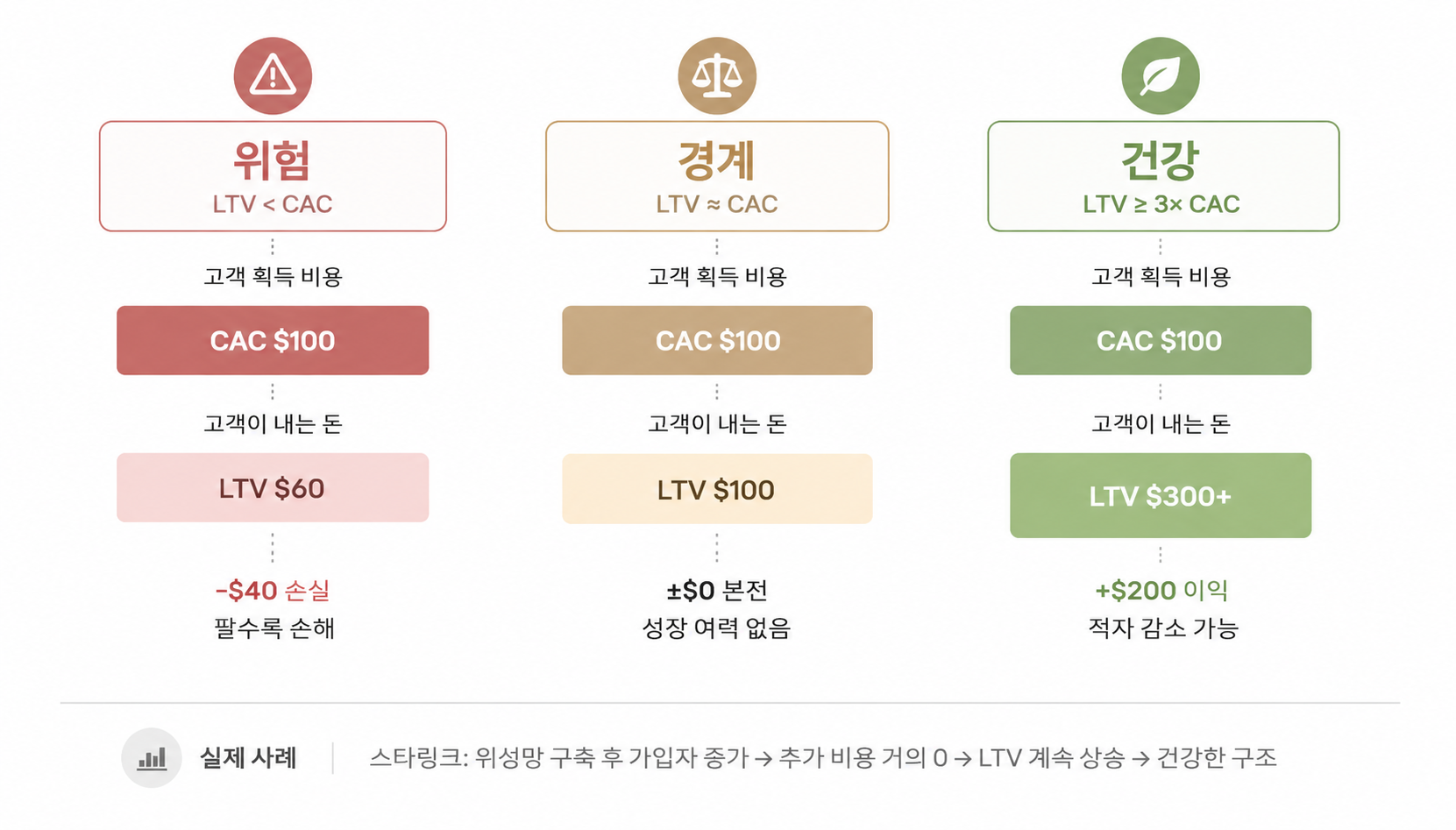
The reason this is the key criterion for investing in loss-making companies is that even if a company is currently unprofitable, a high and improving LTV/CAC ratio means that profits follow as the business scales. Conversely, if this ratio is poor or not improving, the hole created by losses grows along with revenue, no matter how quickly sales increase. Take Starlink as an example: once the satellite network is built, adding subscribers incurs almost no additional cost. CAC gradually decreases, while LTV rises as subscription fees accumulate each month. This is the decisive difference between investment-driven losses and structural losses.
Corporate governance — Do the shares I buy have voting rights?
Buying shares means becoming a co-owner of the company. But if you buy SpaceX shares, can you actually act as an owner? The conclusion, stated first, is that it is nearly impossible. SpaceX was designed so that S-1 grants public investors 1 shares with 1 votes per share, while the Class B shares held by Musk grant 1 shares with 10 votes per share.
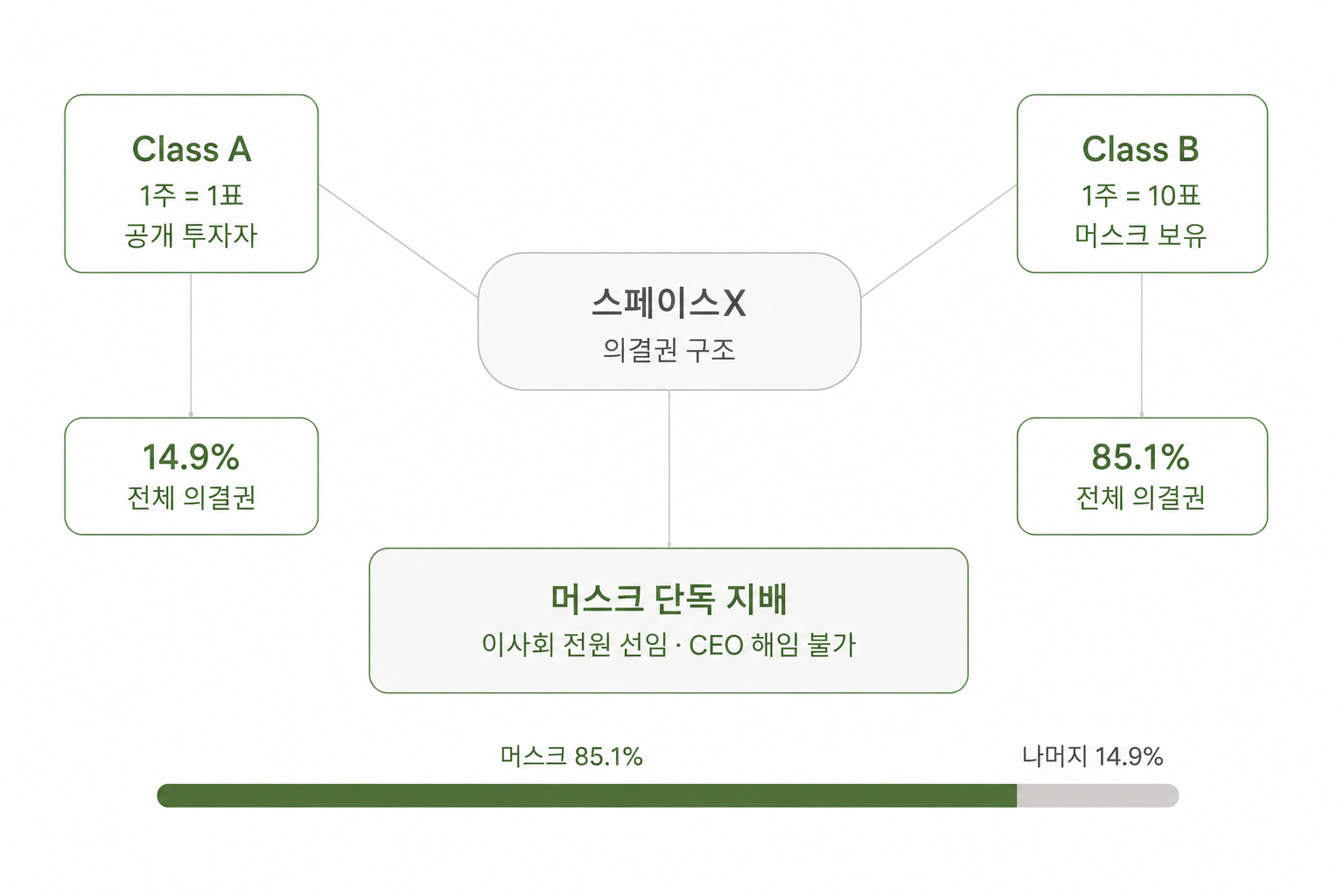
Musk’s voting-rights percentage is 85.1%. SpaceX voting-rights structure Share classVoting-rights holderClass A1 shares = 1 votesPublic investorsClass B1 shares = 10 votesMuskMusk’s total voting rights85.1%—no matter how many ordinary investors join together, the remaining 14.9% cannot overturn Musk’s decision even once. S-1 states that the only person who can remove Musk as CEO is Musk himself. Entering an investment knowing this structure and entering without knowing it are completely different investments. The Danish pension fund AkademikerPension placed SpaceX on its blacklist. The reason: “catastrophic governance.” Public pension funds in the United States managing more than 1 trillion dollars, including the New York State public employees’ pension fund, CalPERS, and the New York City retirement systems, also sent a joint letter.3.none
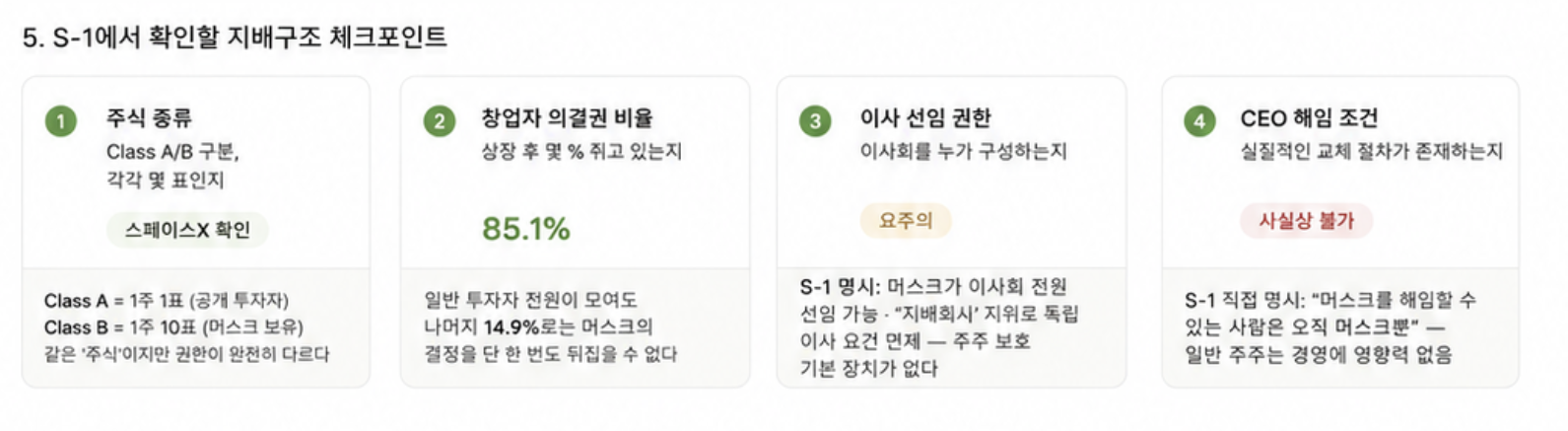
The corporate-governance checkpoints to verify at S-1 are 4 in total.
-
Whether there is a distinction between Class A/B shares and how many votes each carries
-
Founders’ voting rights percentage: what percentage they retain after listing
-
Authority to appoint directors: who makes up the board of directors
-
Conditions for removing the CEO: whether a substantive replacement procedure exists
What you really need to look at in newly listed stocks 5things to wrap up at the end.
Whatever IPO you look at, these 5are the criteria.
① Use of funds — Look first at S-1's “Use of Proceeds” line. Is it growth investment, an exit for existing investors, or debt repayment? This one line reveals the company’s true nature.
② Lock-up release schedule — Put the lock-up release date on your calendar before the listing. This is the period when insider shares flood the market. If you do not know about it, you will be caught off guard by unexpected selling pressure.
③ Unit economics — The LTV (customer lifetime value) to CAC (customer acquisition cost) ratio. Whether the revenue a customer brings in is sufficiently greater than the cost of acquiring that customer. This is the criterion for judging whether the company can withstand losses.
④ Governance structure — Check whether there is a Class A/B distinction and what percentage of voting rights the founder holds. Like SpaceX, 85% means that ordinary shareholders are effectively buying only the right to receive profit distributions. Knowing this before entering is different from not knowing it.
⑤ Listing timing — An IPO is timed by the company. It is in the company’s best interest to go public when the market is hot. The investor’s position is the opposite. The more pressure you feel that you “must buy now,” the more you should step back and question the timing.
S-1The disclosure is where it truly begins. Until that figure is released, you are spending money on expectations.
This report is not investment advice. You are responsible for all investment decisions. © Bullstory Report — bullstory.co.kr
Frequently asked questions
Is SpaceX a privately held stock?
It is not yet a publicly traded stock. Through an S-1 filing, it is pursuing a listing in 2026.
Do you have voting rights if you buy SpaceX shares?
Public investors hold 1per share 1voting shares (Class A). Musk’s Class B accounts for 85.1% of the total voting rights, making effective control difficult.
What should I look at first in the S-1 report?
The key points are the audited financial statements, risk items, and lock-up conditions. The risks stated directly by the company are the closest to the substance.
Where can I check the lock-up release date?
The schedule is stated in S-1’s lock-up provisions. SpaceX releases up to 20%, followed by multiple releases of 7% each in stages after its first earnings announcement.
How would a SpaceX IPO affect my portfolio?
A mega IPO can trigger capital flows through institutional portfolio rebalancing and adjustments to Nasdaq-100 ETF allocations, which could lead to outflows from some indirect AI beneficiaries.