Bullstory Research June 10, 2026
TIGER technology transfer bioactive (0168K0) analysis
Key takeaways
TIGER Technology Transfer Bioactive (0168K0) was listed in 2026 of 3 and recorded net assets of about 2 billion won after 1,141. 6 of 8the unit price as of 6,740won, and the 3month return was -26.35%, showing a sharp correction versus the listing price. The top 5stocks account for about 40% or more, so the results of several technology transfer deals determine the ETF’s overall return.
Bio investment has one of the most extreme characteristics in the stock market.
It is also a “fearsome” sector that investors are reluctant even to approach amid repeated news of clinical failures, but with just one pipeline success, it can deliver a tenbagger(10x return)를 by blowing up는 'a land of overwhelming opportunity'이.
For investors who are frightened by volatility and want to control risk, and for investors who crave explosive returns and want to secure a definite upside, there is a core mechanism in the bio sector that must be understood.
That is “technology transfer (license out, L/O)”입.
Most domestic biotech companies, rather than producing and selling on their own,
-
After nurturing drug candidates through the early and mid stages of clinical development,
-
We structure the business around out-licensing to global big pharma and receiving milestones and royalties.
So서 'Which companies will have technology transfers this year?'ʔ question
곧 'Where is the chance of big profits in the biotech sector this year?'와 it often ends up meaning almost the same thing.
In this article,
we will organize the companies in the ETF, TIGER Technology Transfer BioActive ETF(0168K0)와 with a focus on the key holdings included there,
companies with a high likelihood of technology transfer in the first half of the year.2026Let’s take a look.
First, I will briefly go over the most important holdings in the ETF.
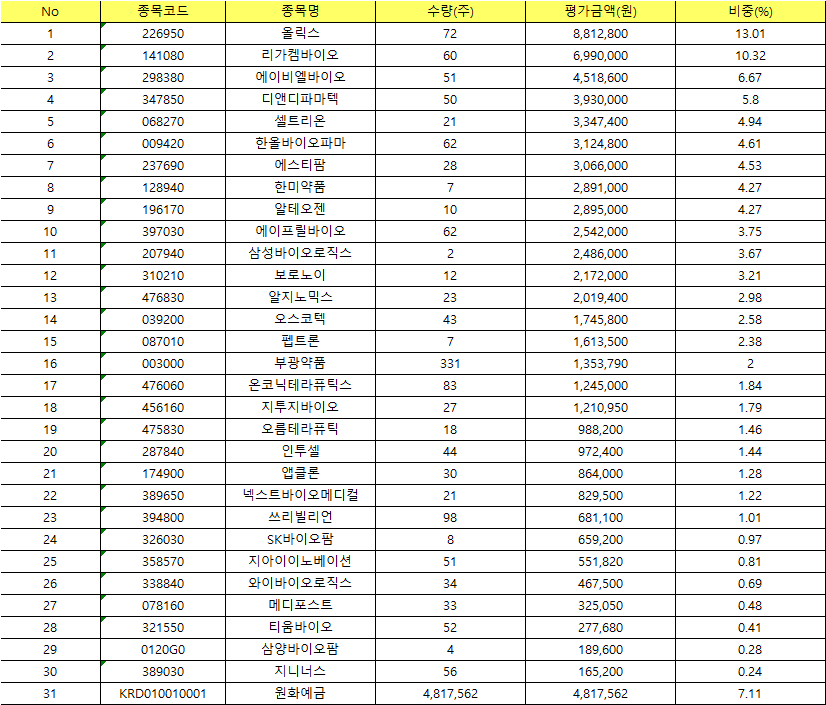
Asset composition (constituent stocks PDF, 2026.06.08 data)
Why did a "technology-transfer bio ETF" even come out?
2026In 3 , Mirae Asset Management listed the TIGER Technology-Transfer Bio Active ETF.
This ETF has two main features.
- Benchmark index: KRX Technology-Transfer Bio Index
-
It is an index made up of bio stocks with high technology-transfer amounts disclosed over the past 60 months.
-
Alteogen, ABL Bio, LigaChem Bio, Peptron, Voronoi, Hanmi Pharmaceutical, D&D Pharmatech, Olix,
AprilBio, and other companies that already have at least one LO record are included.
- Active management
-
Rather than simply tracking the index, the manager also adds "biotech and pharma stocks with a strong record and high potential for technology transfer" as judged by the manager.
-
In fact, among the top ETF holdings are companies such as LigaChem Bio, Alteogen, ABL Bio, Hanmi Pharmaceutical, Olix, D&D Pharmatech, Peptron, and Voronoi, whose names are repeatedly mentioned in connection with technology transfer.
From a beginner investor's perspective, it is easy to feel that "picking individual biotech stocks is too difficult and scary," but this ETF can be understood as a basket focused on the 'technology transfer story'.
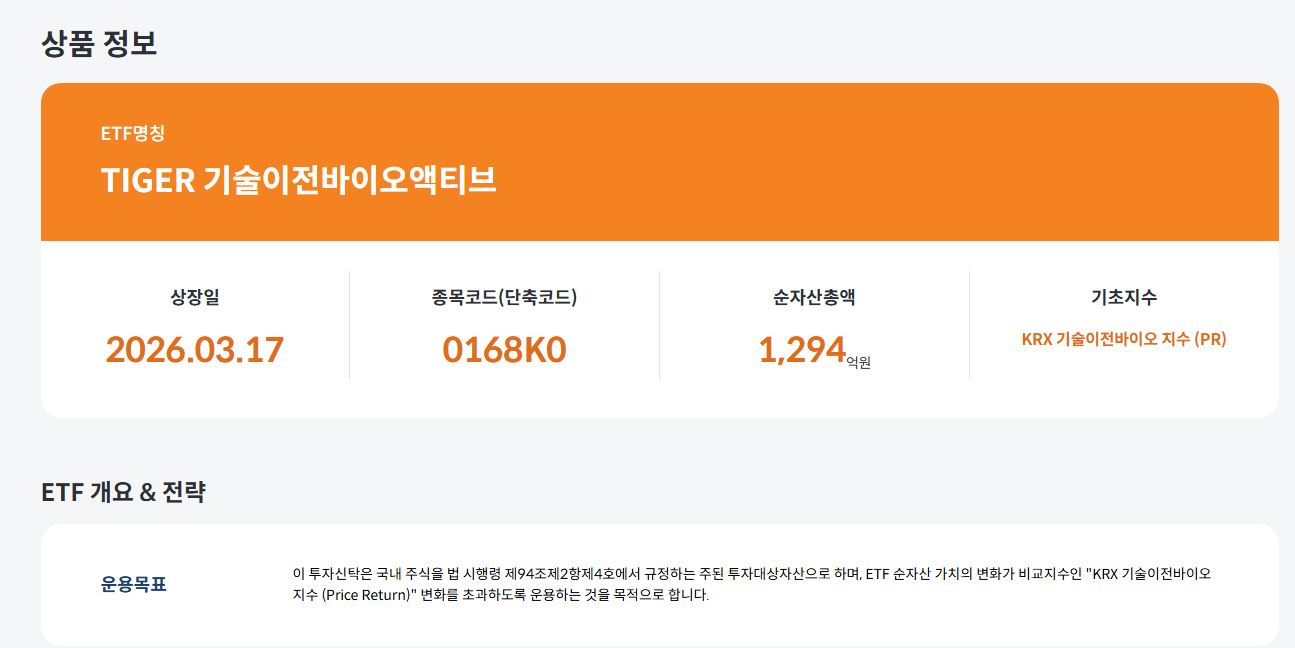
— A map of promising 'technology transfer' stocks seen through an ETF portfolio, instead of a securities firm
Rather than trying to follow every individual stock report, it is often much more intuitive to look at how the ETF manager is actually allocating money.
TIGER Technology Transfer Bio Active said from the time of listing that “KOSDAQ biotech names with high technology-transfer potential”5D0 would be included in assets at 70to 80%, and when you look at the actual holdings, you can see that it is structured with an extremely aggressive allocation to a small number of top holdings.
To sum up based on the holdings table uploaded above,
-
The top 5stocks (Olix, LigaChem Biosciences, ABL Bio, D&D Pharmatech, and Celltrion) account for about 40% or more
-
The top 10stocks (including HanAll Biopharma, ST Pharm, Hanmi Pharmaceutical, Alteogen, and AprilBio) alone make up more than half of the total, making this a fairly concentrated portfolio.
67517a0e-73f2-4920-985e-bea7fa402f70.png](https://bullstory.io/blog-images/476f0445585cda53b83a959286ee78fe.png)
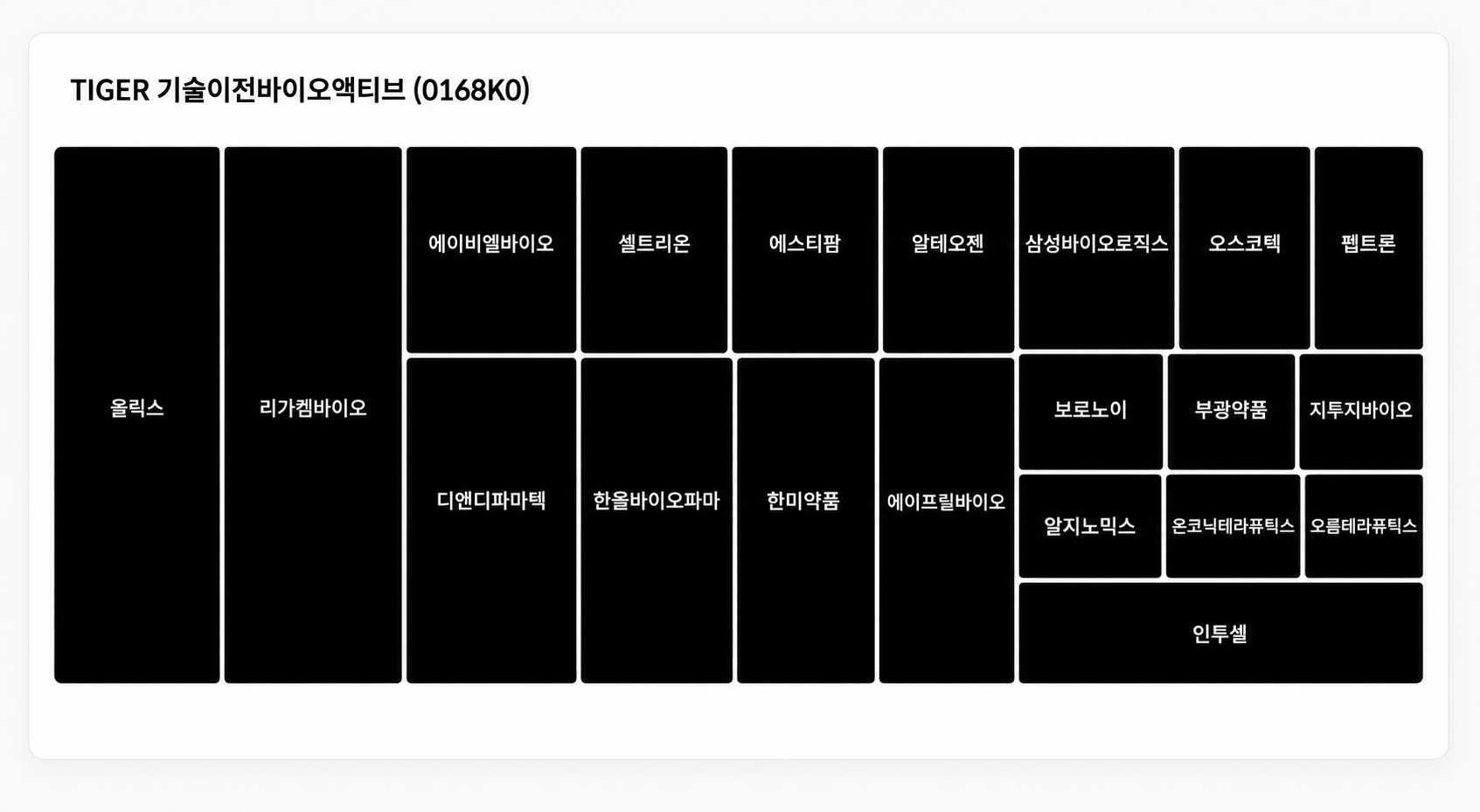
—Current portfolio snapshot – which stocks is it ‘all in’ on
This ETF is painting a picture roughly like this.
- Biotech (Kosdaq new-drug developers) weighting around 70~80%
-
LigaChem Biosciences, Olix, Abclon, D&D Pharmatech, Alteogen, AprilBio, Voronoi,
Peptron, GtuGtu Bio, Orom Therapeutics, Intocell, and others. -
They are also the names that form the core of the KRX technology-transfer biotech index compiled by the Korea Exchange,
“companies that already have experience with technology transfer or are recognized in the market as technology-transfer theme names”이 they are broadly included.
- Volatility buffered by large-cap pharmaceuticals, CDMO, and biosimilars
- Celltrion, Samsung Biologics, Hanmi Pharmaceutical, ST Pharm, SK Biopharmaceuticals, and Wybiodologics, among others, are names with earnings, CDMO, and biosimilar sales, so they are a segment with higher financial stability than fully pure biotech.
- Characteristics of the top-weighted holdings
- Olix(13%), LigaChem Bio(10% range), ABL Bio, D&D Pharmatech, and Celltrion make up the top weights,\n so\n it is a structure that is betting most heavily on\n RNA·ADC·obesity drugs·large antibodies/similars.
In other words, the one-line summary of this ETF is
A platform that has already shown technology transfer once +\n2~3years in, focused investment in obesity, ADC, and siRNA candidates expected to achieve L/O,\nwith a portfolio that builds a floor through Celltrion, Samsung Biologics, Hanmi Pharmaceutical, and others
can be seen as.
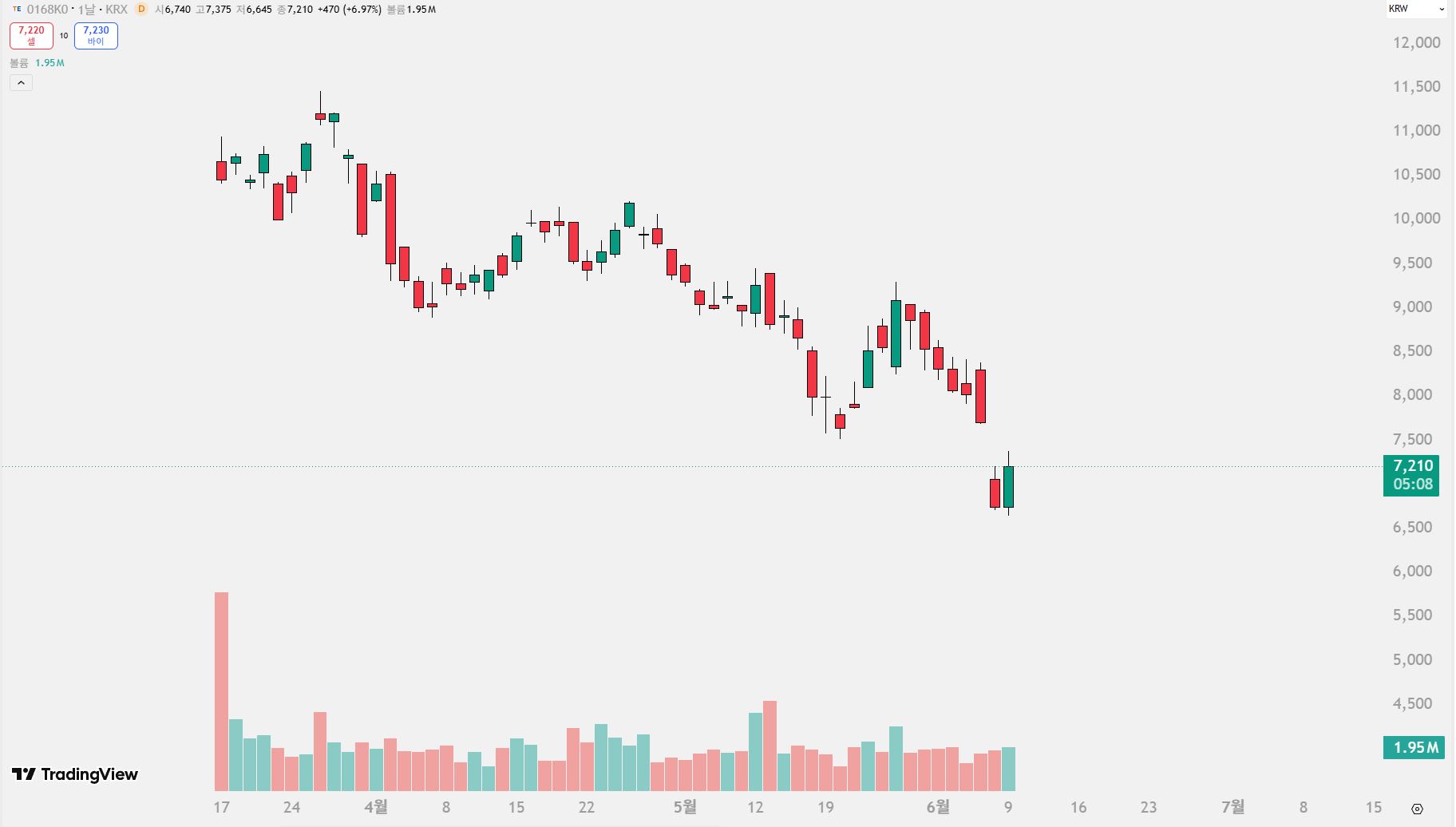
Stock price movement since listing – started hot, cooled quickly
To see the ETF’s current position, you need to look at post-listing flows and price movement together.
- Early 2weeks: AUM 1000billion crossed, foreign investors and retail investors flowed in at the same time
-
3Month 17day after listing, 3month 30day as of net assets had grown to about 1141billion and, after 2weeks, it crossed 1000billion.
-
Foreign investors net bought more than 400billion in a single day, and there is also an article saying KOSDAQ biotech stocks surged together on the first and second trading days after listing.
→ A period that received a concept premium once, thanks to the headline “money is flowing into tech-transfer biotech.”
- 4~6month: along with the KOSDAQ biotech correction, -20fell by more than %
-
4In an article from early in the month, the KOSDAQ pharmaceuticals index 1weeks -2.7fell by about % when TIGER Technology Transfer Bio Active is said to have recorded a larger drop over the same period.
-
6month 8day data show the ETF price as 6740won, 3month-return -26.35%로 and it is marked as having undergone a fairly large correction compared with its listing price.
-
Among biotech ETFs, there is also analysis saying it was listed among the top names in recent 1month-return declines.
- Signs of active management – reducing and excluding Samsung Pharm's weight
-
After the Samsung Pharm issue, the manager gradually reduced Samsung Pharm's weight from 7.5% → 5% → 0%로 and removed it from the portfolio.
-
Unlike an index passive ETF, this is an example showing that active management, which boldly drops stocks when issues arise and switches into other promising LO names, is actually working.
The fact that it has been actively rebalancing individual holdings and weights from the very start of management can be seen as a major differentiator from a plain index ETF.
— The “future picture” based on constituent stocks and price trends
Now, if we combine the current portfolio structure + recent price corrections, we can summarize how to view what lies ahead as follows.
1) a structure in which results concentrate in a few top holdings
-
Companies with strong technology-transfer stories, such as Olix, RigenBio, ABL Bio, D&D Pharmatech, and Alteogen, occupy the upper end of the weighting, so that “the overall ETF return is driven by the success or failure of just a few LO deals”00 is taking shape.
-
Advantages:\n Truly 1~2a structure that can generate a large amount of alpha versus the index even if a large LO occurs
-
Disadvantages:\n If the event timing is delayed, clinical data falls short of expectations, or there is a market issue like now,\n -20~-30% correction could come again is also a structure.
In other words, rather than a “mild biotech index,” as an ETF,\n“a portfolio that leverages multiple technology-transfer biotech stocks all at once”5D0; it is closer to that view.
2) is also shaken together by the ‘big biotech wave’ of sector, policy, and rates
-
This ETF takes a KOSDAQ weight of 80% or more and a biotech weight of 70~80% , so it is naturally heavily affected by KOSDAQ policy, rates, and risk-on/risk-off.
-
Government policies to revitalize KOSDAQ, expansion of LO due to the expiration of big pharma patents294;**20;**However,\ while there are structural positives, if interest rates rise again or during a phase of revaluation of drug values (bubble adjustment), the entire sector is bound to sway together.
Now 3months -26% correction can be interpreted as,\ “Rather than the ETF being bad, it is a period when the entire sector is undergoing a correction,\ and because concentration in the top names is high, it was hit more hardely as a result.”
(In fact, I think the market is abnormal right now. A market where everything is solved just by buying Samsung Electronics and SK hynix—how long will it last?)
3) In the long term, the “clinical and LO calendar” is key
According to Mirae Asset's explanation,\ the management team uses a strategy of actively adjusting stock weights to reflect clinical momentum and global technology trends.
In the end, this means,
-
Most of the companies with the largest weights are —1~3within a few years, major clinical results (2phase, 3phase or pivotal) — and are approaching events such as option contract expirations and the completion of LO negotiations
-
In line with that schedule, it means increasing and reducing exposure, betting on the virtuous cycle of “clinical success → LO → capital inflow.”
Therefore, when assessing the “future” of this ETF, what matters more than the performance of individual names is whether the clinical/LO cycle across the entire biotech sector is alive97 is what matters more.
— Personal investment strategy memo – how to use this ETF
From an investor’s perspective, TIGER Technology Transfer Bio Active is
-
It is a diversified product rather than a pure single-stock biotech play, but it is a much more aggressive product than a typical healthcare ETF.
-
The clinical and LO events of the top few names are effectively the ETF performance, so a strategic approach based on the clinical calendar and conference presentation calendar is needed rather than short-term chart trading.
So when is the best time to use this highly volatile product, and how should it be used?
The specific entry timing and strategy are as follows.
**1. Entry timing: the optimal period indicated by the 'global conference calendar'
The share prices of biotech sectors move several months ahead of the global conference momentum.
The main annual conference schedule is as follows.
| Conference name (timing) | Key characteristics and events | Importance from an investment perspective |
| J.P. Morgan Healthcare Conference (1month) | Global big pharma partnering meetings and LO discussions | |
| American Association for Cancer Research (AACR) (4month) | Early-stage (preclinical to clinical 1stage) basic research results are presented | |
| American Society of Clinical Oncology (ASCO) (6month) | World's largest scale, key clinical data presented just before commercialization | (usually the highest importance) |
| European Society for Medical Oncology (ESMO) (9~10month) | Major clinical data presentations in the second half of the year and confirmation of global trends |
Among these, the single event that becomes the most powerful catalyst for the share prices of domestic biotech companies centered on technology transfers is unquestionably 6month, when the 'ASCO (American Society of Clinical Oncology)'입s takes place. As this is the venue where the success or failure of clinical data involving actual cancer patients is decided, it is the period when the probability of technology exports to global big pharma의 rises the most. Considering the share-price pre-reflection rule, the best buying window to capture the benefits of this event is 23months before, in '34month'.**
2. Dollar-cost averaging and split-buying strategy: until when, and why should you buy?
This academic meeting schedule clearly tells you the floor for staged buying in the current range. Starting from the current range, after a deep correction of -20% from the post-listing high, you should finish your systematic staged buying by no later than '4month'.**
Because you need to secure shares in 3~4month, when public attention is lighter and trading volume dries up, so that after 5month and as the 6month academic season draws near, market expectations fill to the brim and you can fully capture the returns of the 'overheated phase' where share prices are on fire. In other words, by the time others see the academic meeting news and rush in to chase the stock in 6month, the most proper and orthodox way to use this ETF is for us to have already completed our buying and either enjoy the returns at the peak of expectations at our leisure or take a position that gradually reduces exposure.
3. How to use the portfolio and alternative strategies
-
Core use case (technology transfer beta):
It is used as a key tool when you want to avoid the 'sharp drop risk from clinical failure' of individual biotech companies through diversified investing, while capturing only the biotech sector's unique upside momentum from the 'technology export jackpot'. 전As for the overall assets, it is advisable to allocate only within a tolerable volatility range (for example: 10~15%) to your position. -
Alternatives depending on risk appetite:
If the concentration in the ETF's top holdings and its volatility still feel burdensome, then rather than this product it is right to switch to a large-cap-focused 'general healthcare ETF' or a more stable 'U.S. big pharma ETF'. On the other hand, if you want to bet on the technology export potential of domestic small- and mid-cap biotech firms, accumulating this ETF at the timing mentioned earlier is a far more advantageous choice in terms of risk versus return than forcing yourself to buy individual stocks.
This article is nothing more than a perspective for interpreting ETF structure and the current position.
-
volatility that you can personally tolerate,
-
After first deciding what portion of your total assets to allocate to the biotech sector,
it may be worth considering using this ETF within that as “technology transfer beta.”
Frequently asked questions
TIGER Technology Transfer Bioactive (0168K0) What are the management strategy and the main investment targets?
The core is active management focused on technology transfer history and potential. Based on the KRX Technology Transfer Bio index, it invests in companies with LO history and potential.
0168K0What are the portfolio composition characteristics of?
The top 5stocks account for about 40% or more. Biotech makes up 70~80%, making it a concentrated portfolio centered on technology transfer.
How have trading flows and performance trends been since this ETF’s listing?
After listing, 2weeks later AUM had increased to 1,141billion, and as of 6month 8day, the 3-month return was -26.35%.
Among the ETF’s constituents, which companies have a technology transfer (LO) history?
According to disclosures, the constituents with technology transfer histories include Alteogen, ABL Bio, LigaChem Biosciences, Peptron, Voronoi, Hanmi Pharm, D&D Pharmatech, OliX, and AprilBio.
0168K0What are the main risk factors?
The ETF is sensitive to corrections in KOSDAQ biotech stocks. Since listing, it has -20recorded a decline in the % range during correction phases, and its inclusion weight can shift significantly due to technology and clinical issues.