Bullstory Research August 3, 2026
Kakao dividend 68won… dividend yield 0.2% reveals the real reason
Key takeaways
Kakao's dividend, based on the most recently confirmed quarter, is 68 won per share, for a total of 299 hundred million won. The dividend yield is approximately 7 month 10 closing price of 33,650 won, or about 0.2%. KakaoBank, in the same group, allocated a year-end dividend of 460 won per share, totaling approximately 2,000 hundred million won.
If you want to know Kakao's dividend, it is better to check the numbers first. The dividend per share is 68won. 7The closing price on 10was 33,650won, based on which the dividend yield is 0.2%. 3It is a structure in which more than 68won is tied up in one share to receive won.
It is effectively too small to be meaningful as a dividend investment. However, KakaoBank, an affiliate in the same group, allocated a year-end dividend of 2025won per share for the fiscal year. The total dividend amount was approximately 460hundred million won. Why is there such a difference?2,000Why is there such a difference?
By reading this article to the end, you will find a summary of the specific amount and schedule of Kakao headquarters' dividend, as well as the real reason its dividend yield is less than 1%. It also examines the dividend trends of subsidiaries such as KakaoBank and Kakao Pay, allowing you to evaluate the entire Kakao group from a dividend perspective.
It is clear that the dividend amount is small. However, the key question is whether the shareholder return policy is not working properly or whether there is another reason.
How much dividend is Kakao paying now
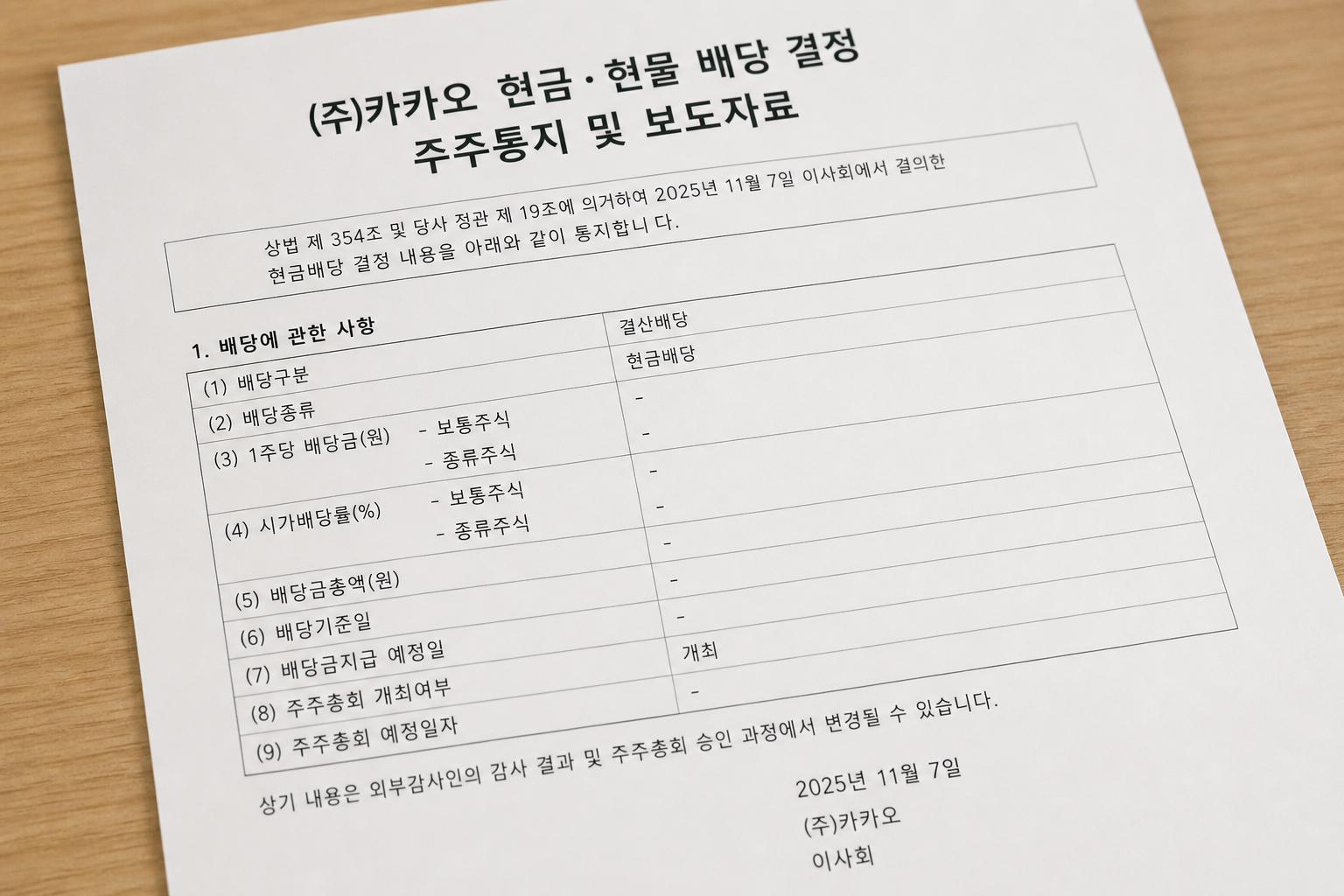
Kakao (035720) recently confirmed a dividend of 68won per share. A total of 299hundred million won was distributed to shareholders.
The most recently finalized quarter was the quarter ending in 2026; 3it recorded revenue of 1.9 trillion won and net income of 2,268 billion won. A company whose quarterly net income alone exceeds 2,000 billion won uses 1 won as its annual dividend, 299 billion won.
The key is where the profits earned are being used. The reason is examined in depth later.
There are three key points to check now regarding Kakao's dividend.
- Dividend per share: 68 won (based on the most recently finalized quarter)
- Total dividend amount: 299 billion won
- Dividend yield: approximately 0.2%
Kakao's 52year high was 69,700 The current share price has fallen nearly by half from the peak. Even though the stock price was cut in half its dividend yield is 4 Kakao's 9 headquarters is currently 4 unattractive.98 Kakao's 4 dividend yield is 3%.0 This means that the dividend itself was originally almost nonexistent.80 Regardless of the stock price direction, from the perspective of dividend investors,95 Kakao's headquarters is currently unattractive.98 Kakao's 9 dividend yield is 9%.4 This means that the dividend itself was originally almost nonexistent.9 Regardless of the stock price direction, from the perspective of dividend investors,0-5 Kakao's headquarters is currently unattractive.0 Kakao's 80 dividend yield is 7%.80 This means that the dividend itself was originally almost nonexistent.8 Regardless of the stock price direction, from the perspective of dividend investors,4 Kakao's headquarters is currently unattractive.0 Kakao's headquarters is currently unattractive.81 the stock price and regardless of 9 the perspective of dividend investors, 80 Kakao's 2 headquarters is currently 8 attractive.9Kakao's 80 year high was 8 The current share price has fallen nearly by half from the peak. Even though the stock price was cut in half its dividend yield is 99%. This means that the dividend itself was originally almost nonexistent. Regardless of the stock price direction, from Kakao's headquarters is currently unattractive.3 Kakao's 84 dividend yield is 86%.8 This means that the dividend itself was originally almost nonexistent. Regardless of the stock price direction, from Kakao's headquarters is currently unattractive.0 Kakao's 7 dividend yield is 88%.9 This means that the dividend itself was originally almost nonexistent. Regardless of the stock price direction, from its dividend yield is 0.2%. This means that the dividend itself was originally almost nonexistent. Regardless of the stock price direction, from Kakao's headquarters is currently unattractive.4 Kakao's 9 dividend yield is 4%.98 the stock price and regardless of 4 the perspective of dividend investors, 3 Kakao's 0 headquarters is currently 80 attractive.0Kakao's 84 year high was 7 The current share price has fallen nearly by half from the peak. Even though the stock price was cut in half its dividend yield is
Why Kakao's Dividend Is Particularly Small
It is not because the company is unable to make money. The issue is where it is putting the profits it earns.
The biggest reason is that it is pouring money into its AI (artificial intelligence) business. Kakao said in its recent earnings announcement that it would continue increasing AI-related investment. Since the new business requires substantial capital, increasing dividends would reduce its investment capacity. The company sees the present as a time to sow the seeds.
The second reason is that it prioritizes share buybacks over dividends. Share buybacks reduce the number of shares outstanding, 1raising earnings per share. The company believes this approach is more direct in increasing the share price.
The third reason is a corporate governance issue. Kakao has many affiliates and a relatively high consolidated debt ratio. To improve financial soundness while continuing its investments, it is difficult to return all remaining cash to shareholders.
2026year 3month-end quarter Naver's finalized financial figures show revenue of 1.9trillion won and operating profit of 2,114hundred million won. The company is making money, but this structure does not immediately lead to dividends.
To summarize why the dividend yield keeps remaining low:
- AI investment first: Capital is being invested in new businesses, so cash is being retained within the company
- Preference for share buybacks: The company considers them more effective at supporting the share price than dividends
- Financial burden: There is still work to do to improve the consolidated financial structure of affiliates, limiting the scope for increasing dividends
With the share price having fallen 52 below half of its all-time high 69,700 won, many are calling for more active shareholder returns. A dividend yield of 0.2% is effectively a level at which almost no dividends are paid. The company is currently maintaining its investment-first principle.
Why would KakaoBank, part of the same Kakao group, make a different choice?
Why is KakaoBank's dividend completely different from Kakao's?
[KakaoBank allocated 2025%EC9%B4%EC%B9%B4%EC%98%A4%EB%B1%85%ED%81%AC-%EC%A3%BC%EA%B0%80-%EC%A0%84%EB%A7%9D-%EC%A7%80%EA%B8%88-2%EB%A7%8C%EC%9%B%90%EB%8%C80%EA%B0%80-%EA%B8%B0%ED%9A%8C%EC%9D%B8%EA%B0%80-%ED%95%A8%EC%A0%95%EC%9D%B8%EA%B0%80) per share in its year-end dividend for 460 won. The total dividend was approximately 2,000 hundred million won. Compared with Kakao, the parent company, whose dividend yield is 0.2%, the gap is substantial.
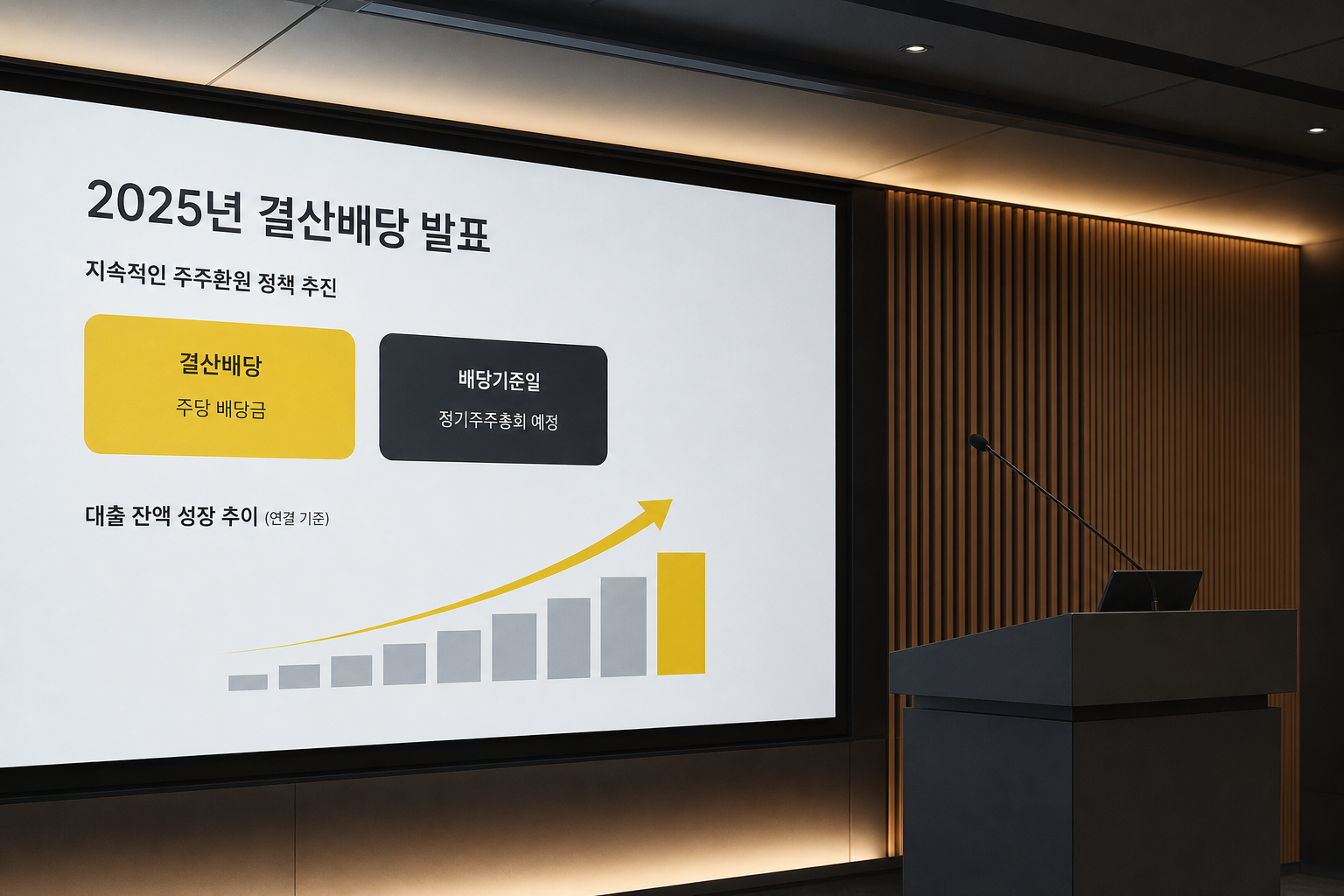
The gap between the two comes from their business structures. Kakao is a platform and content company, while KakaoBank is a bank. Banking is the business of lending money and receiving interest. Because increasing lending steadily builds interest income, the pace at which operating profit grows is different.
Kakao’s headquarters is centered on advertising, e-commerce, and content revenue. Labor costs and server costs eat into revenue. Since little profit remains, the pool available for dividends is inevitably thin.
The gap between the two comes from their business structures. Kakao is a platform and content company, while KakaoBank is a bank. Banking is the business of lending money and receiving interest. Because increasing lending steadily builds interest income, the pace at which operating profit grows is different.
Banking-sector regulations also play a role. Banks can return surplus profits to shareholders once they meet soundness requirements. Soundness regulations require banks to build up capital at a certain ratio to prepare for the risk that money they have lent may not be repaid. KakaoBank’s expansion of dividends after exceeding its capital requirements is consistent with this context.
Another reason the dividend stands out is the difference in their growth stages. Kakao is already a platform company entering maturity, so even when revenue grows, the pace at which that growth translates into profit is limited. KakaoBank, on the other hand, is expanding its outstanding loan balance and deposit balance. Because it is at a point where the pie is growing, the absolute amount of profit has also increased.
Kakao’s dividend is small not because it wants to distribute less to shareholders. It is because the profit available for distribution is itself limited. KakaoBank, as a bank with cash flows based on interest income, was able to expand its dividend pool. The dividend gap between the two companies is a result of their business models rather than a difference in their willingness to return value to shareholders.
Frequently asked questions
How likely is Kakao to announce a special dividend or an interim dividend?
The likelihood is low. The company is prioritizing AI investment and share buybacks, keeping cash within the company, so there is little room for a special dividend.
What are Kakao’s most recently finalized dividend and dividend yield?
Per share 68 won, with a dividend yield of approximately 0.2%. It is difficult to view this as dividend investing for cash flow purposes.
What are the specific reasons Kakao is accumulating cash without increasing its dividend?
Large-scale investment in the AI business, a preference for share buybacks, and the financial burden of consolidating affiliates limit its capacity to increase dividends.
How much is KakaoBank’s dividend, and why does it differ from Kakao’s?
per share 460won, for a total of approximately 2,000million won. The bank’s dividend capacity increased through interest income resulting from expanded lending.
What does a market dividend yield of 0.2% mean?
A market dividend yield of 0.2% means that there is almost no cash return relative to the share price. It is difficult to expect annual cash flow from dividends.