Producer prices 2.5%↑ · exchange rate 1500won breached, compound price pressures
As the Middle East war dragged on, international oil prices and the won-dollar exchange rate rose simultaneously, pushing producer prices up month on month last month by 2.5%. Coal and petroleum products rose 31.9% in a month, and the exchange rate crossed the 1500won mark.
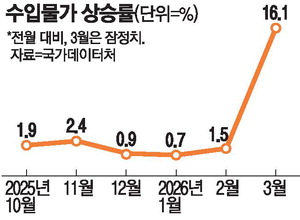
The prolonged war in the Middle East is creating complex inflationary pressures for the South Korean economy. International oil prices are rising, while the won-dollar exchange rate is also climbing. Speculative foreign-exchange trading aimed at short-term gains is increasing as well.
According to the Bank of Korea, producer prices rose month on month last month by 2.5%. This was the largest monthly increase since 1998, 2, when the Asian financial crisis was underway, reaching 2.5%. The figure was released on 24.
Year on year, prices rose 6.9%. This was the highest level since 2022, 10, when they reached 7.3%. The impact of rising energy prices was strongly reflected at the production stage.
Coal and petroleum product prices 31.9% surged. Chemical product prices also rose 6.3%. Sharp increases in the prices of raw materials such as naphtha pushed producer prices higher.
The war in the Middle East broke out late last 2month. In 3, the increase in producer prices widened to 1.6%. The effects of a sharp rise in international oil prices were fully reflected in 4.
The exchange rate also rose. The won-dollar exchange rate moved within a range of 1450won until early this month, then rose from mid-month, and on 15 broke through the 1500won level. A weaker won directly raises import costs.
On 22, it soared to 1519.4 won intraday, coming close to breaking through the 1520won level. The simultaneous rise in oil prices and the exchange rate heightened inflation concerns. Cost pressures are growing for products that South Korea relies heavily on imports for.
South Korea imports most of its crude oil, gas and raw materials. Rising raw material prices and the exchange rate are increasing import costs. This is adding upward pressure to prices overall.
Sources: 뉴시스 경제
Bullstory synthesized this report from the linked sources. AI may have assisted the writing process. Check the original reports for factual confirmation.