South Korean Treasury bonds 3-year 3.736rise to %, concern over K-shaped growth
South Korean Treasury yields rose sharply across major maturities, with the 3-year yield 3.736closing at %. Concerns are growing that rising interest rates, alongside growth centered on AI and semiconductors, could deepen polarization in the real economy.
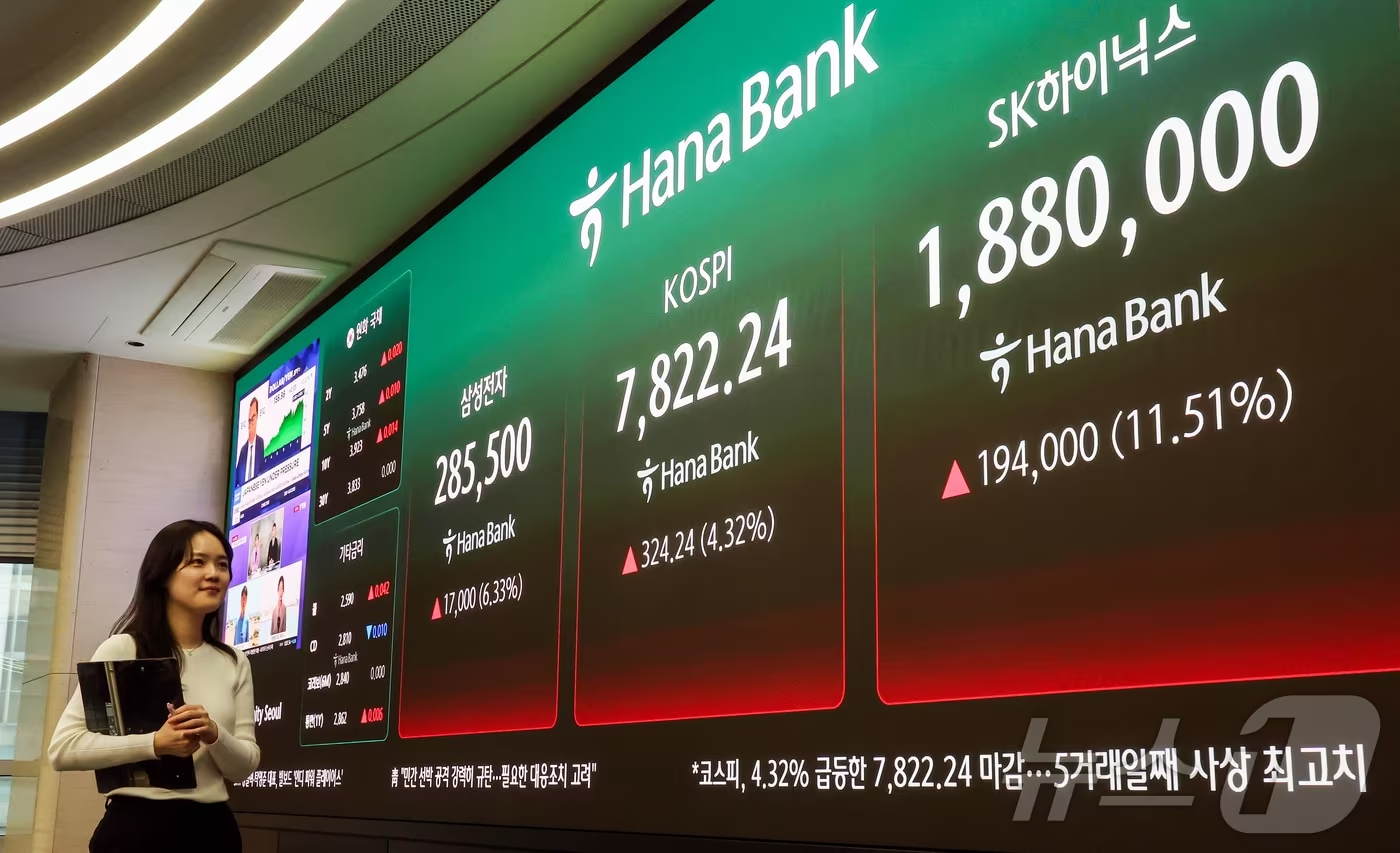
Amid a sharp rise in global government bond yields, South Korean Treasury yields rose faster than those in the United States. This is fueling concerns that the shock of high interest rates could spread across the real economy. The concentration of growth in artificial intelligence and semiconductors is also drawing attention.
3-year-maturity Treasury yields 22closed the session at 3.736%. Compared with the start of the year, 2.935the yield was 80.1basis points higher. The yield on this maturity is sensitive to the Bank of Korea's policy rate outlook.3The yield on this maturity is sensitive to the Bank of Korea's policy rate outlook.
Compared with a month earlier, the 3-year yield rose 37.1basis points. During the session, it climbed to 3.78%, reaching its highest level recently. This indicator reflects market expectations for interest rates.
10The yield on government bonds with a year-long maturity closed the session at 4.174%. This benchmark has also risen since the start of the year. The market is watching the trend in long-term yields.
The ultra-long-term 30year bond stood at 4.152%, while the 50year bond stood at 3.998%. Long-term yields are also generally higher. Rising long-term yields could affect government financing and long-term investment.
Interest rates in South Korea are rising faster than in the United States. Over the same period, the U.S. 3year yield rose 17.7% from the start of the year, while South Korea's rose 27.3%. This difference partly reflects differences in government bond supply and demand and policy outlooks.
By industry, AI- and semiconductor-related sectors are showing relatively strong momentum, while non-semiconductor manufacturing and domestic-demand sectors continue to underperform. This trend is summed up in the market as a “K-shaped recovery.” Concerns have been raised that rising long-term interest rates could affect this polarization.
Sources: 뉴시스 경제
Bullstory synthesized this report from the linked sources. AI may have assisted the writing process. Check the original reports for factual confirmation.