Bullstory Research September 13, 2026
Why did IonQ buy a semiconductor factory, going beyond quantum computers
Key takeaways
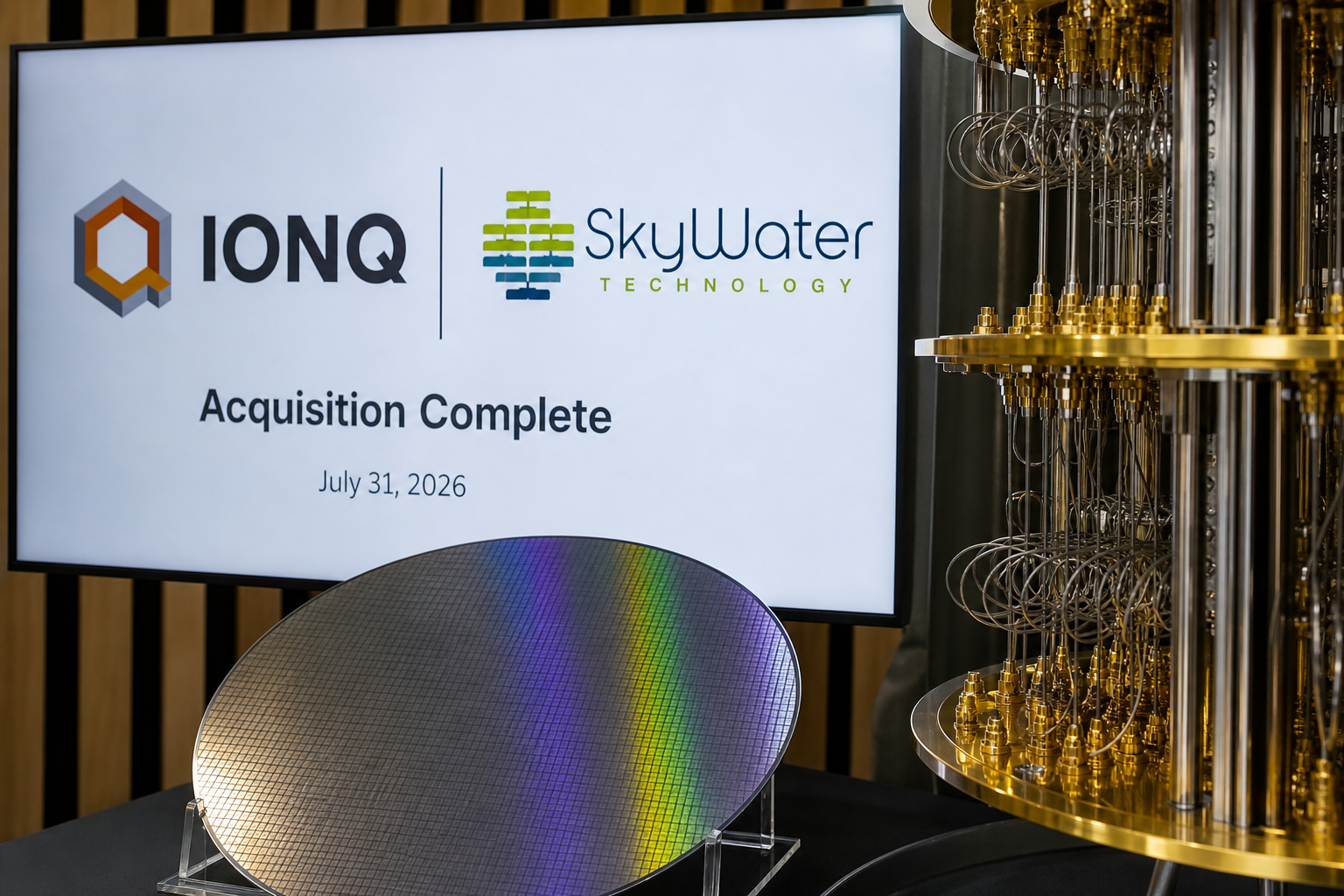
IonQ completed its acquisition of SkyWater on 2026 in 7 for approximately 31 billion in cash and stock. The purpose is to connect chip design, manufacturing, and packaging to secure a U.S.-based supply chain and in-house production infrastructure. Based on the company's assumptions after the acquisition, cash is approximately 18 billion.20.
Why the Quantum Company Bought a Factory
IonQ completed the 2026year 7month 31day, with approximately 18hundred million dollars in cash and stock, completing its acquisition of U.S. foundry SkyWater.96%91%9%90%4%93%8%84%0%4%80%0%8%3%99%84%0%84%0%95%6%82%98%8%4%8%5%88%9%88%98%3%9%85%85%8%81%96%91%9%90%3%4%95%88%9%8%7%80-2026%85%84%88%9%90%0%80%9%4%93%9%)
Why did a quantum-computing company buy a factory too?
The goal is to connect chip design, manufacturing, and packaging while securing a supply chain in the United States.
It can be understood as a strategy to establish the foundation not only for computing performance but also for reliably producing and supplying products.
The Quality of Computation Made from Atoms
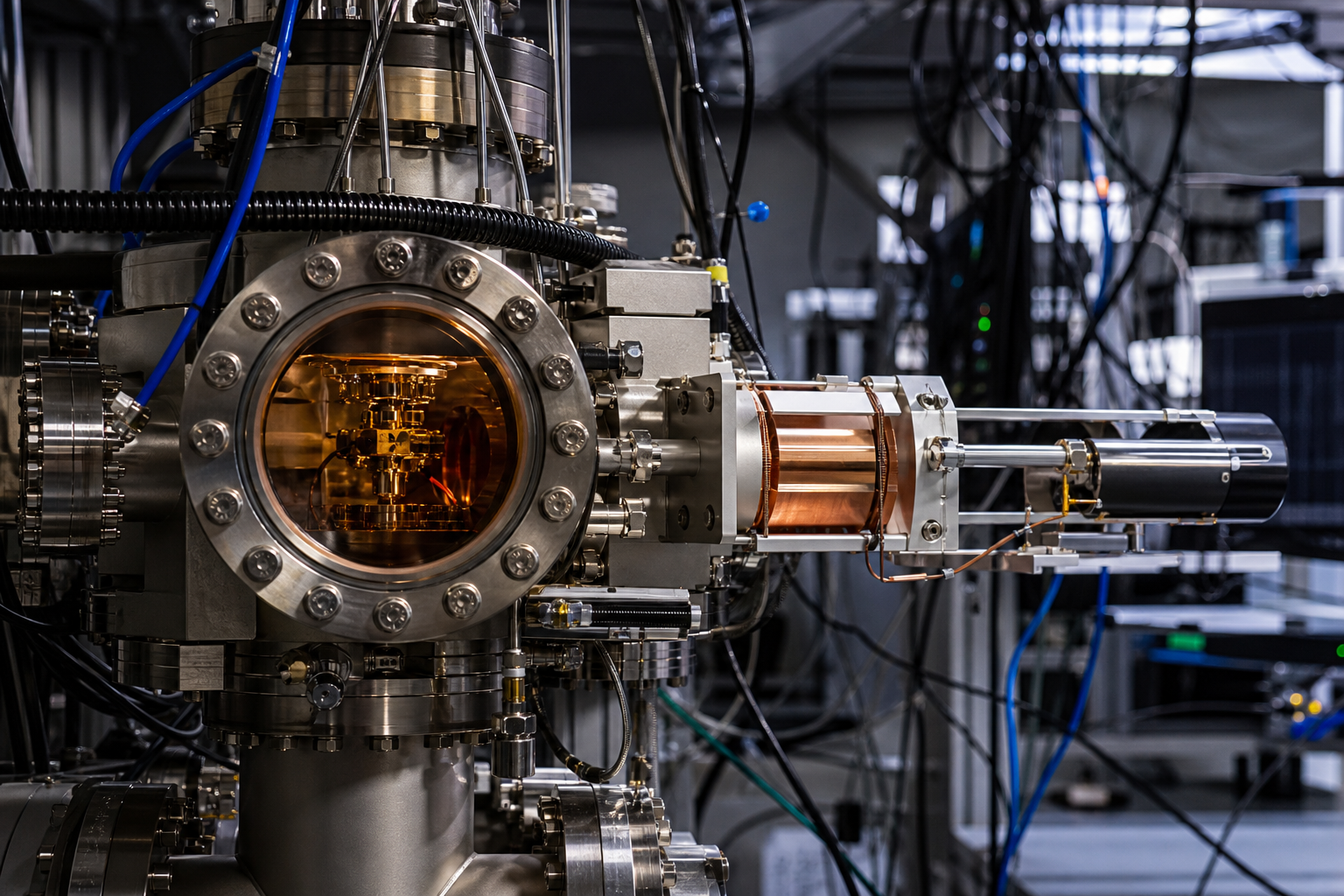
The key is the ‘[ion trap]’ that confines and controls ions with electromagnetic fields.
Its strengths are uniform qubits, direct connections between qubits, and quantum states that remain stable for a long time.9%4%98%8%8%8%9%9%)
Direct connections can reduce the additional operations involved in passing through intermediate qubits and the opportunities for errors to accumulate.
However, operation speed, precise control, and scaling remain challenges. It is important to distinguish physical qubits from error-corrected logical qubits and assess whether computational accuracy is maintained even as the scale increases.
Technology Customers Can Try
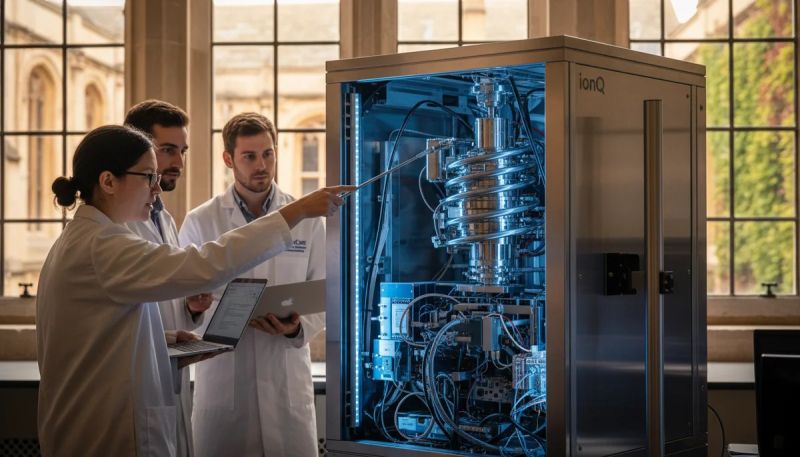
IonQ is broadening customers’ access routes through system supply, cloud services, and collaborative research and development.
2026 year 3 month 11 day Cambridge agreement included the establishment of an innovation center, a 256qubit system deployment plan, and cloud access.
The deployment was a future plan at the time of the announcement.
According to the company announcement, 2026year 2approximately of the 50% was overseas, **60% was commercial revenue.
The two classifications can overlap, and commercial revenue also includes university partnerships. The key question is whether customer touchpoints lead to repeat use and follow-on contracts.
Expanding the Business Beyond Computers
2025year 9month 17day acquisition completion announced by Oxford Ionics strengthens ion-trap technology based on standard semiconductor chips.
Connected with SkyWater's manufacturing base, the strategy to secure capabilities from quantum control through production comes into view.
It also targets demand for system connectivity, precision measurement, and secure information transmission by expanding into networking, sensing, and security.
However, it must be separately verified whether the technology secured actually leads to products and revenue.
Costs Attached to Revenue Growth
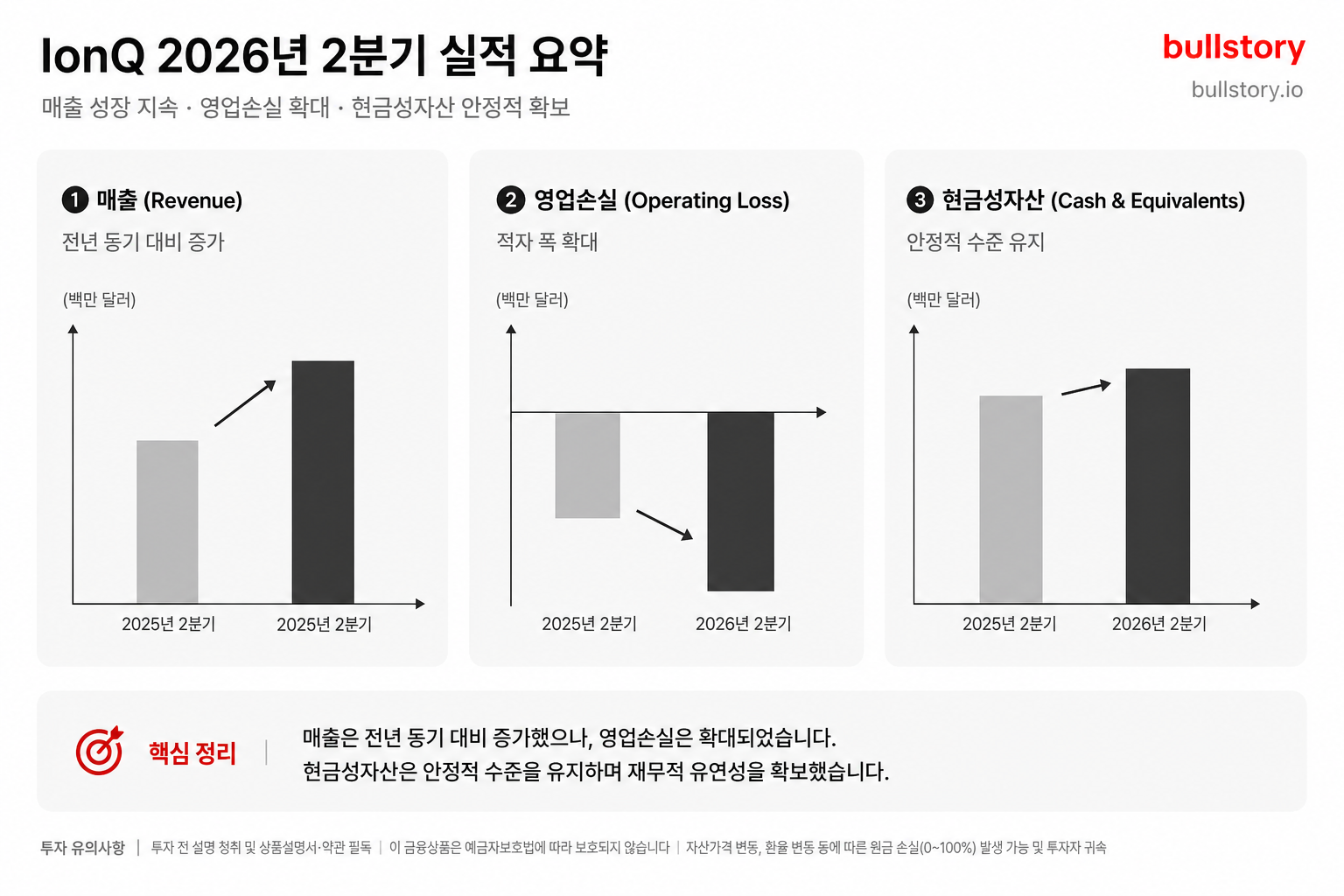
2026Year 2quarterly revenue was 8,005million dollars, up approximately 287% year over year.
8Month 5The annual outlook presented on day is 2billion8,000million–2billion9,000million dollars, excluding SkyWater revenue.
Operating loss was approximately **3 hundred million3,724 thousand dollars, and net loss attributable to IonQ was approximately 18 hundred million6,774 thousand dollars.
Net loss included approximately 16 hundred million4,912 thousand dollars in non-cash warrant liability valuation loss, so it should not be viewed entirely as a cash outflow.
6As of month 30 day, cash, cash equivalents, and investments were approximately 30 hundred million dollars, while the company's estimate after reflecting cash spending on the acquisition was approximately 20 hundred million dollars.
The growth of the existing business and the acquired business should be distinguished, and whether deliveries and recurring revenue can cover the increase in costs should be examined.
A Day IonQ Is Expanding
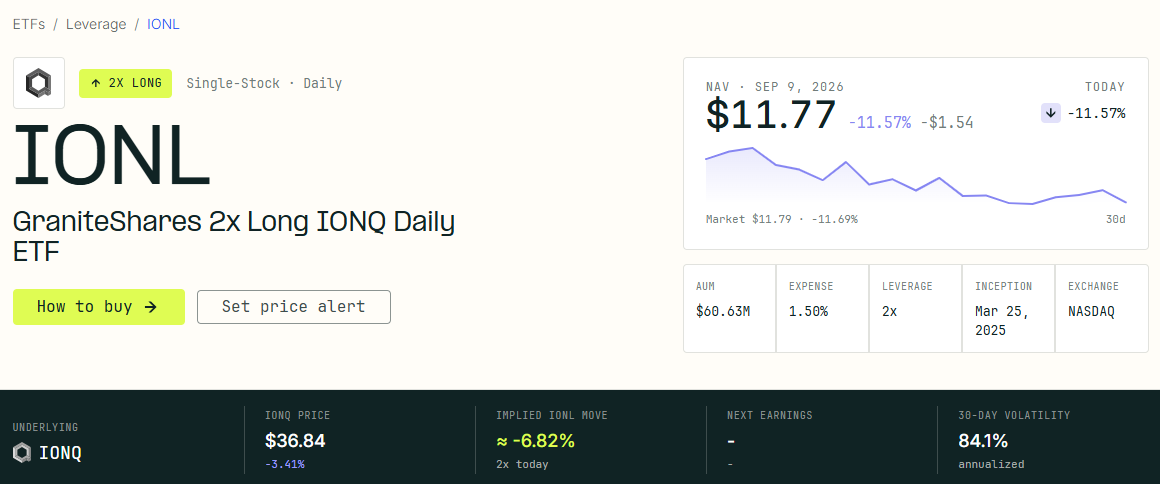
GraniteShares' IONL (GraniteShares 2x Long IONQ Daily ETF) is a single-stock leveraged ETF that targets a multiple of IonQ's daily return200% before fees.
Instead of directly holding IonQ stock, it constructs multiple-times exposure through derivatives such as swaps2x exposure, and it is not a product that diversifies across multiple quantum companies.
Assuming the daily target is achieved without fees or tracking error,
when IonQ rises 5%, IONL rises 10%, and when it falls 5%, it falls 10%.
Both upside opportunities and losses are amplified, and achievement of the actual target is not guaranteed.
Because it resets daily, its long-term return is not double.
Assuming the product achieves a daily multiple of 2x, when the stock is 100 → 110 → 100, the product becomes 100 → 120 → approximately 98.18.
According to the fact sheet, the total annual operating expense ratio is 3.63%, and the net expense ratio after waivers and reimbursements is 1.50%.
The expense limit applies through 2026year 12month 31, and trading costs are separate.
See IONL in detail → [https://bullstory.io/go/ad/pbzfchdu]
Frequently asked questions
What exactly is the reason IonQ bought a semiconductor factory directly instead of a quantum computer?
Key point: The strategy is to secure a U.S.-based supply chain by connecting design, manufacturing, and packaging. 2026 in 7 on 31 for approximately 18 billion in cash and stock, it completed its acquisition of SkyWater.
How will the acquisition of a semiconductor factory affect IonQ’s qubit count and performance expansion?
Key point: Acquiring the factory will help with manufacturing precision and preparation for mass production. However, computing speed, control, and scaling remain challenges.
How are IonQ’s expected cost structure and revenue model likely to change as it owns the factory?
Key point: Operating losses may increase initially because of acquisition-related costs and higher operating expenses. The key question is whether deliveries and recurring revenue can absorb the costs.
From an investor’s perspective, what should be examined to determine whether IonQ’s factory acquisition is a risk or an opportunity?
Key point: Check delivery performance, conversion to recurring revenue, and post-acquisition cash (6month 30day, approximately 30hundred million dollars). Warrant valuation losses are non-cash items.
What advantages could IonQ gain over competitors (e.g., Rigetti) by establishing its own production system?
Key point: An in-house production system could provide an advantage in supply-chain and shipment stability. However, the commercialization of the technology and its connection to revenue still need to be verified.