The possibility of a Micron stock split, 1,000why it is being discussed after crossing the dollar mark
Micron shares 5 month 28 were nearing about 900 dollars per share. After UBS raised its price target (1,650 dollars), its market capitalization entered the 1 trillion-dollar range, prompting investors to discuss the possibility of a stock split.
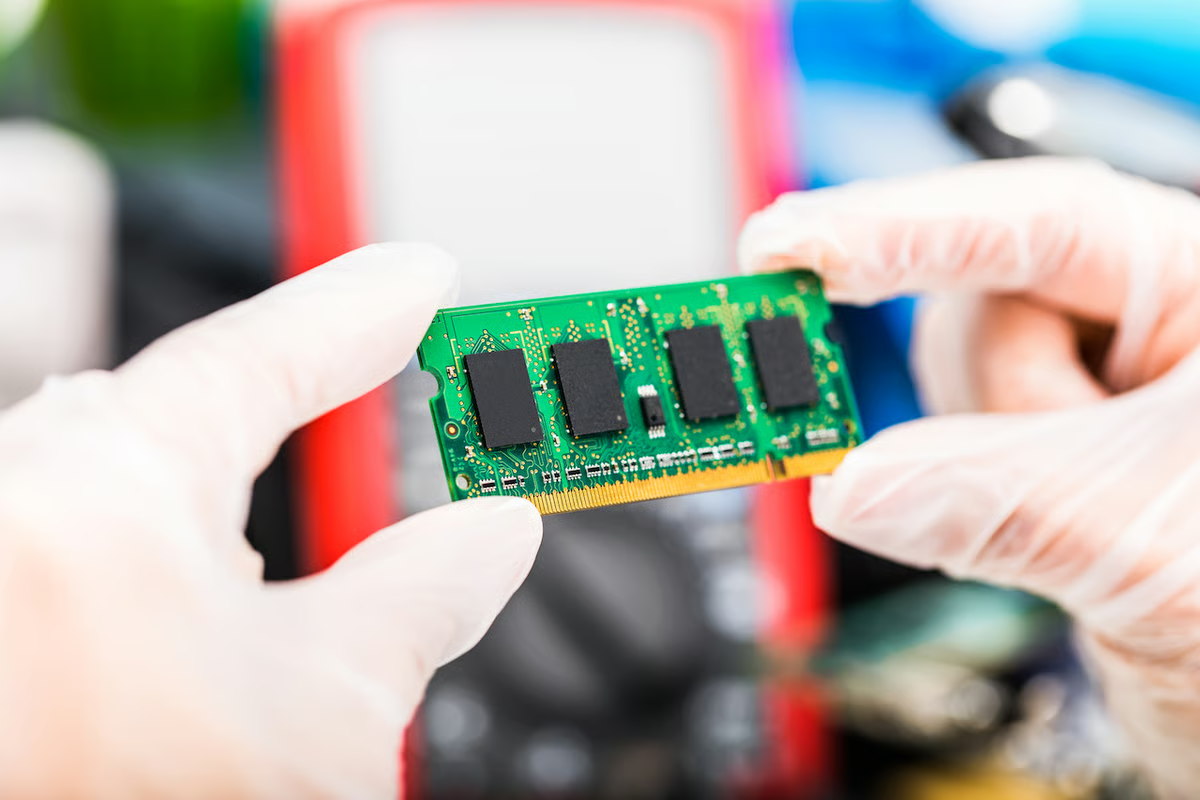
Micron shares topped 1,000 dollars. 5 On 28, UBS raised its price target to 1,650 dollars, drawing in buyers, and the shares soared to about 900 dollars. With its market capitalization nearing 1 trillion dollars, investors began to voice hopes that “a split is surely coming, right?” It is a move that would be hard to ignore, but until management speaks directly, it remains a matter of just one small step.
Why is a Micron split back in the conversation now?
Micron2000 years 5 months 2 at 1 split its shares, and has not done so even once in the years since. The reason is simple: its share price did not rise. 26 After the split in 2000, through the end of 2024, its share price rose by just 34%. Over the same period, the Nasdaq Composite rose 410%. There was simply no momentum to bring up a split.
2026The picture changed completely in 260 nearly percent from the start of the year. 2026At the beginning of the year, the stock was trading at about 295 dollars, but in 7 it was trading around 1,000 dollars. 1It amounted to a rise of about 800 percent in years. 6On 24, the day of the earnings announcement, the regular-session closing price was 1,047.20 dollars, and it reached 1,185.90 dollars in after-hours trading. When the stock topped 1,000 dollars, talk of a stock split naturally surfaced.
But there has been no official statement. 2026As of 7, neither Micron’s board nor CEO Sanjay Mehrotra has ever mentioned a stock split in public. The only topics discussed on earnings conference calls were supply constraints, capital expenditure, and long-term contracts. The SEC 8-K filings also contain no mention of a split. What the market is talking about is different from what the company acknowledges.
Two factors underpinning expectations of a stock split
There are two reasons the market is discussing the possibility of a stock split.
- Share price. When a stock trades near 1,000 dollars per share, management teams have a practice of considering a split. This is because contract units (typically 100 shares) become too expensive when stock options are used as compensation. 1,000-dollar shares, 100 shares would cost 10 thousand dollars (about 1 hundred million 3 million won).
- Returns after a split announcement. According to Bank of America, companies that announced splits over the past 40 years recorded an average return of 12 percent in the 25.4 months after the announcement.
There are also substantial counterarguments. Now that fractional share purchases are widespread, investors can buy a small amount even when the price per share is high. This means management teams have less reason to rush. The fact that memory semiconductors are a cyclical industry is also an obstacle. If the share price plunges immediately after a split during a steep downturn, the move could backfire on management.
Earnings fuel the discussion
Earnings are behind the discussion of a stock split. Micron’s most recent results (2026 year 3 quarter, 2026 year 2–5 month) showed revenue of 414 billion 5,600 million dollars and adjusted EPS of 25.11 dollars, all at record highs. CEO Mehrotra said the company was meeting only about 60% of customer demand at present. With supply falling short, the share price is likely to continue its upward trend.
In summary, Micron has made no official announcement of a stock split, and management has not mentioned one. The share price’s move above 1,000 dollars sparked the discussion, which earnings have merely supported. It is important to remember that the company’s intrinsic value itself does not change, regardless of whether a split takes place.
Analysts’ upgraded earnings forecasts and growing demand for memory chips have been cited as factors behind the recent share price rise. UBS’s price-target increase has been reported as having influenced buying sentiment. The company has made no official announcement at this time.
If the share price continues to rise, discussion of a stock split is expected to remain a focus of market attention. It is uncertain whether a split will be announced in the near term. Investors are watching upcoming quarterly results and company announcements.
Could Micron follow Nvidia and Broadcom’s precedent?
Companies often cited for comparison are Nvidia and Broadcom. Both carried out stock splits after sharp share-price increases, and their share prices subsequently rose further. Whether this pattern could also apply to Micron is a point of debate in the market.
As for the timing, 2026 year 4 quarter (9~11 month) earnings release date, 2026 year 9 month 29 day is cited as the most likely time for an announcement. Some analysts say that announcing a stock split alongside strong earnings, as Nvidia did, is a typical course of action management could take.
The results themselves provide ample grounds for expecting a stock split. 4Quarterly revenue guidance was 490 billion to 510 billion dollars. This was well above the analyst consensus at the time of 432 billion dollars. HBM3E and HBM4 products are 2027 fully booked through 220, with strategic customer contracts worth a total of USD
Reasons a stock split might not happen
Memory semiconductors are a cyclical industry. If a sharp share-price decline follows a stock split during a downturn, that would backfire for management. Some also point out that, now that fractional share purchases are commonplace, investors can buy even when the price per share is high, reducing management’s incentive to rush into a split.
Ultimately, what determines whether a stock split happens is management’s intention, not the share-price level. The decision rests entirely with the board.
Sources: The Motley Fool
Bullstory synthesized this report from the linked sources. AI may have assisted the writing process. Check the original reports for factual confirmation.