Bullstory Research August 4, 2026
Glass substrate-related stocks complete guide, which stocks to buy now vs which stocks to wait for(2026)
Key takeaways
Glass substrate-related stocks can be broadly divided into two groups. Substrate manufacturers such as SKC and Samsung Electro-Mechanics are 2027~2028preparing for mass production in , while Philoptics and HB Technology have already started supplying equipment and reflecting earnings. 2026is the turning point from story to earnings, and depending on which position you enter, there is a difference in earnings between 1~2. years.

Get free HB테크놀러지 email updates.
Bullstory sends one daily email when new analysis or important company news is available.
You should not lump glass substrate-related stocks into one basket. Some companies, like SKC and Samsung Electro-Mechanics, are still waiting for certification, while others, like Philoptics and HB Technology, are already booking sales in their ledgers right now. Even within the same theme, the timing of earnings can differ by up to 2 years, so you need to separate the stocks you should buy now from the ones you should2027~2028wait to buy until years later.
This article sorts 5stocks by position and organizes their mass-production timing and financial condition. In the end, it also looks at how the strategies differ between people buying now and people waiting for 6months.
Key stocks to know right now 5at a glance
Even within the same theme, the timing of revenue recognition and the risk profile can differ greatly from stock to stock. The following 5 stocks are at the center of that.
SKC (011790), the frontrunner aiming for the world’s first mass production
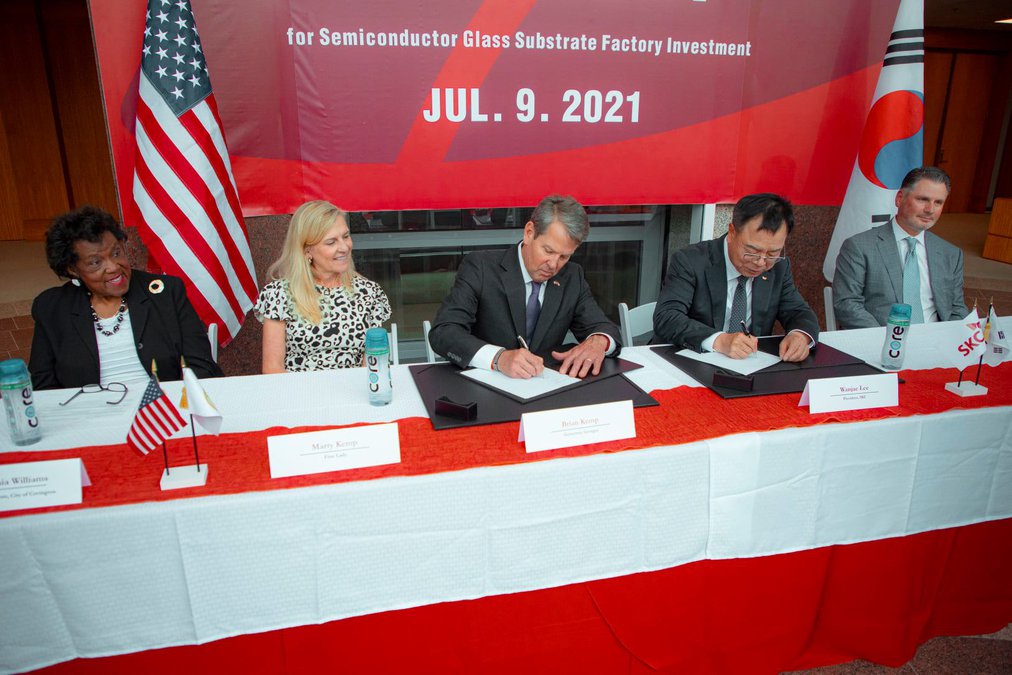
SKC's subsidiary Absolics completed construction of the world's first mass-production plant for high-performance computing (HPC) glass substrates in Covington, Georgia, USA. In terms of speed, it has a gap versus competitors.
2026Year 1month, Absolics had completed installation of the main equipment at the Georgia plant and had begun supplying mass-production samples to AMD. This means it has entered the customer qualification phase (Qualification, the process of being verified as suitable for actual mass production).
Absolics received production support subsidies under the U.S. Chips Act totaling 7,500dollars. It was later selected as a glass substrate category recipient under the U.S. Department of Commerce's National Advanced Packaging Manufacturing Program (NAPMP) and even signed a research and development subsidy agreement worth 1billion dollars.
There is one investment point. If disclosure comes out that AMD and AWS quality certifications have been passed, this stock's character changes from a 'speculative name' to an 'earnings name'.
Samsung Electro-Mechanics (009150), the most aggressive late entrant
Samsung Electro-Mechanics 2026~2027said during its earnings release conference call that it is preparing for mass production in ~. This is not just talk.
2026year 7month 2day, Samsung Electro-Mechanics signed the main contract to establish the joint venture “GlaSSEM” with Dongwoo Fine-Chem, a subsidiary of Japan’s Sumitomo Chemical Group, to produce glass cores (a core material for glass substrates). The two companies’ total investment is about 4,800billion won, and Samsung Electro-Mechanics will hold 66% equity.
A pilot line has been built at the Sejong plant to verify prototype performance with AMD, NVIDIA, and others. It started later than SKC, but the backing of Samsung’s ecosystem is a strength.
Philoptics (161580), the first among equipment stocks to make money
The first thing needed to build a glass substrate factory is equipment. At the stage of building the mass-production line, laser equipment goes in first, and materials generate sales through repeated purchases after production begins.
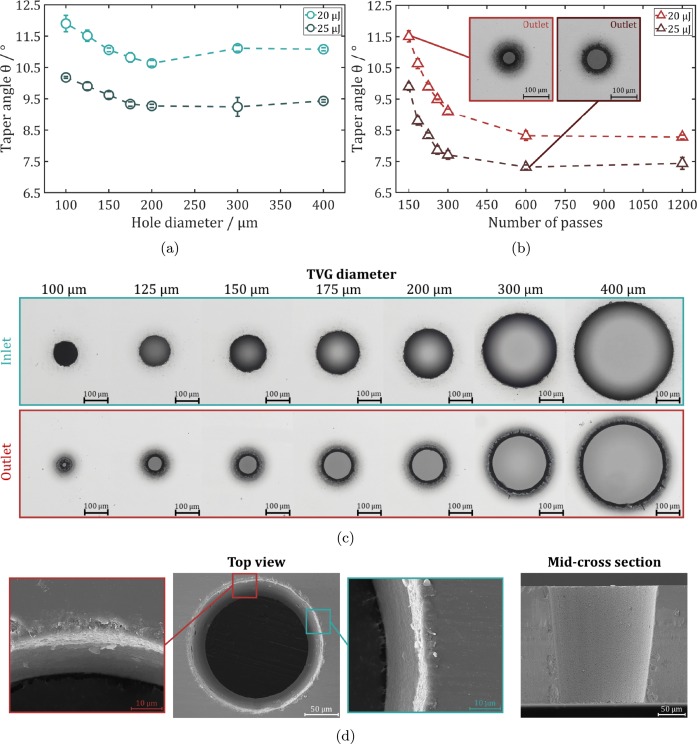
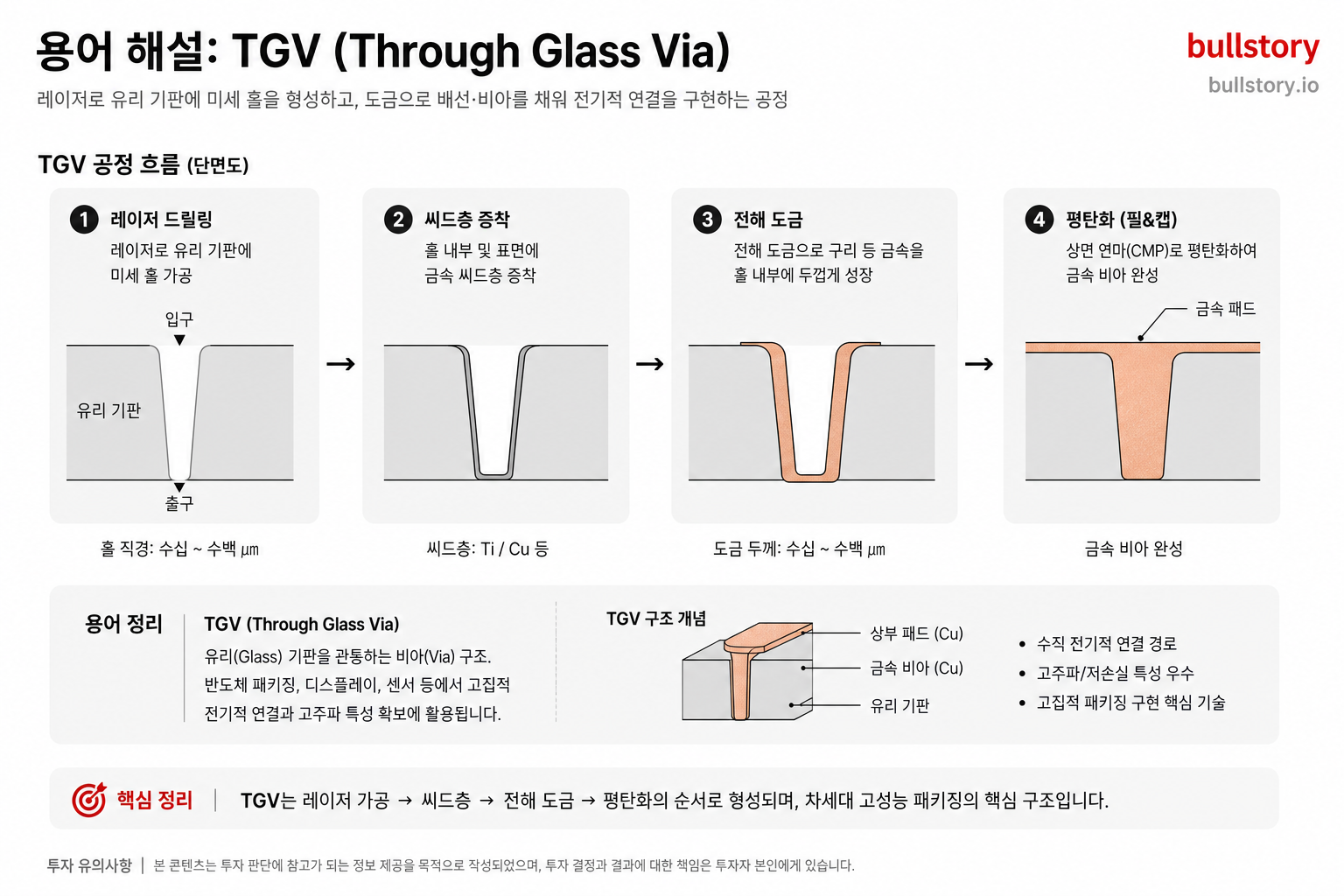
Philoptics has independently developed TGV (Through-Glass Via, an electrode path through glass) laser equipment for drilling tiny holes in glass substrates, as well as dicing equipment for precision cutting of glass. It has a reference for supplying mass-production laser equipment to the Absolics Georgia plant.
Because it has a track record of supplying equipment to both Absolics and Samsung Electro-Mechanics, it benefits whichever side achieves mass production first. 2025year 3month, operating profit increased 348.5% year on year, confirming an earnings turnaround. That is why Yuanta Securities selected it as its top pick.
HB Technology (078150), exclusive supplier of inspection equipment to Absolics
HB Technology supplies glass-substrate inspection equipment to Absolics. Inspection equipment is delivered right before the manufacturing line begins operation, so the timing is quickly similar to Philoptics.
HBM (high-bandwidth memory) and 2.5D packaging inspection specialist has expanded into glass-substrate TGV processes and wiring-layer inspection. Its supply chain is tied to SKC and Absolics, so it tends to move in step with the direction of SKC's share price.
Chemtronics (089010), a materials partner following the Samsung Electro-Mechanics line
Chemtronics is expanding its display panel etching technology to semiconductor glass substrate processes. It is developing an etching process technology for TGV, which drills holes in glass substrates with a laser and then treats the interior with chemicals.
In collaboration with Samsung Electro-Mechanics, it is positioned as a chemical materials partner supplying TGV etching, cleaning, and CMP slurry. Materials have a structure in which repeated purchases occur after mass production begins so revenue recognition is later than for equipment stocks. On the other hand, once it enters the supply chain, it is not easily replaced.98.8.84.2.4.88.88.97.90.3.4.9.4.8.94.2.8.0.84.6.80.0.80.95.84.8.88.8.4.86.8.9.86.8.8.92.88.8.0.97.85.9.4.1.0.9.9.9.88.2.84.8.94.9.4.9.0.
A quick comparison at a glance
| Ticker | Position | Current Stage | Visibility of Results |
|---|---|---|---|
| SKC | Substrate manufacturing (leader) | Supplying samples to AMD, awaiting certification | Sharp improvement if certification is passed |
| Samsung Electro-Mechanics | Substrate manufacturing (catch-up) | Sejong pilot line + GlaSSEM JV | 2027Targeting start of operation in the second half of the year |
| Philoptics | Equipment | Deliveries completed to both companies (Absolix and Samsung Electro-Mechanics) | Recognition in earnings starts now |
| HB Technology | Inspection equipment | Exclusive supply to Absolix | Deliveries at the stage just before mass production |
| Chemtronics | Materials and chemicals | Cooperating with Samsung Electro-Mechanics, developing technology | Repeated purchases after mass production |
The market sees 2026~2027year as the certification stage, 2027~2028year as the point when full-scale mass production begins. The waiting period for buyers varies by stock. The financial position and risks of each stock are examined separately below.
Why is glass substrate such a big deal?
The plastic (organic) substrates now used in AI semiconductors have hit a physical limit. Glass is the only candidate to replace them.
SEMI (the international semiconductor equipment and materials association) projected that mass production of glass-substrate-based packages would begin around 2028year, and that the annual average growth rate could then reach 67.2%. This means that the issue is not how quickly the market opens, but that its opening itself is close to a given fact.
Why are plastic substrates hitting a wall?
A semiconductor substrate is the bridge that connects the chip and the main board. The pathways for electrical signals are also etched here. Most smartphone and PC chips have used plastic-based substrates since the early nineteen hundreds.2000.
The problem is AI semiconductors. The industry’s diagnosis is that plastic substrates have reached their limit for use in GPUs and HBM, or high-bandwidth memory, attached beside them.
First, they bend. Plastic substrates warp when exposed to heat, a phenomenon called warpage. Glass maintains its shape up to 400 degrees Celsius. Even if the substrate bends only slightly, there is a risk that thousands of connection points between the chip and the substrate will break.
Second, they cannot draw circuits densely enough. To improve AI performance, chips need to be packed more tightly, but organic substrates, which are weaker in strength, have limited area and rough surfaces, making it difficult to draw fine circuits. Glass substrates can draw circuits with line widths below 2 micrometers (μm).
Signals also leak. Plastic materials have high dielectric loss, meaning electrical signals are converted into heat and lost, so signal attenuation becomes severe at high frequencies. It is like having to drive on a highway but the road surface is so rough that the car keeps losing speed.
What changes if it is replaced with glass
| Item | Plastic (organic) substrate | Glass substrate |
|---|---|---|
| Thermal resistance | Easily warps under heat | 400°C shape retention |
| Circuit line width | 10μm-level limit | 2μm or below possible |
| Signal loss | Significant attenuation at high frequencies | High-frequency signal loss reduced by up to 67% |
| Warpage (twisting) | Vulnerable to temperature changes | Reduced by 80% compared with organic materials |
| Current unit cost | Baseline | 2~5times that of an organic substrate of the same area |
At the same computing performance, heat generation is reduced by 15~20%, and power consumption falls by more than 10%. For data center operators, that means electricity and cooling costs can both be reduced.
There are drawbacks as well. Production costs are high, and because glass is fragile, yield management is difficult when manufacturing large panels. According to a SEMI report from 2026 of 5, the price of a glass substrate is 2~5times higher than an organic substrate of the same area, and by scaling the panel up to 600×600mm, it is expected to become similar in cost to premium organic substrates around 2028.
It is indeed expensive. Once performance reaches a level that is physically impossible with plastic, price is no longer something to negotiate but simply a cost that has to be paid.
So then, which companies in this market are actually making money, and how do you distinguish between the companies you should buy now and the companies you should wait 2more years to buy? The picture becomes clearer once you first look at how the big tech companies are already moving.
Global big tech has already moved
SKC’s 100percent-owned subsidiary Absolics has completed the world’s first mass-production plant dedicated to glass substrates in Covington, Georgia, in the United States, and is conducting quality tests with AMD, Amazon (AWS), and Intel. It is at the stage of making actual products and sending them to big tech companies for verification.
What Intel unveiled in Tokyo in 2026year 1month
Intel publicly unveiled a thick-core glass substrate integrating EMIB (Embedded Multi-die Interconnect Bridge) at 2026year 1month 21day 23to 2026, at “NEPCON JAPAN ” held at Tokyo Big Sight in Tokyo, Japan. The industry sees this as entering the stage of physical verification for large packages for AI data centers.
Intel’s disclosed glass substrate is 78×77mm in size, and is described as using 10RDL (redistribution layer, wiring layers that connect signals between the chip and the substrate) layers on the top and bottom,10-2-10a thick glass core structure that enables fine-pitch routing from the top,10with signal paths stacked in layers above and below the chip to let a large amount of data flow at the same time.
Intel has been self-developing glass substrates, investing 2014since 10in total. 2023It built a dedicated R&D line in Arizona in 2026and also disclosed a roadmap to put glass substrates into full-scale use for AI data center packages between 2030. Intel, which has invested for more than 10years, revealing a physical sample signals that this technology is no longer confined to the lab.
In the market, there is a view that this disclosure could also put speed pressure on Samsung Electronics and TSMC’s roadmaps.
Why AMD and Amazon are looking at Absolics
Absolics is in discussions with AMD and Amazon (AWS) over the supply of glass substrates, and word is that the pre-qualification stage, an advance quality verification step before full-scale mass production approval, is nearing.
AMD plans to 2025~2026year to introduce glass substrates to high-performance system-in-package (SiP).13chiplets for its EPYC server processors and 22pieces of silicon for its AI accelerators. To stably combine these pieces on one substrate, a substrate that is heat-resistant and does not warp is needed, and plastic-based materials have reached their limits.
Absolics plans to increase procurement of materials and components for glass-substrate processing in the second half by more than 60%. It has also set aside funding. 2025year 1quarter, it borrowed 5,000million dollars, and in 5month it received CHIPS Act production subsidies of 4,000million dollars (1tranche).
However, there is one point to note. Absolics’s original commercialization timing was 2024year 6month. As the plant completion was delayed, this was pushed back to '2025year mass production,' and later revised again to '2026year certification completed.' There is still a gap between big tech showing interest and actually passing certification.
Why Samsung and SK entered at the same time
| SKC (Absolics) | Samsung Electro-Mechanics | |
|---|---|---|
| Current stage | AMD and AWS pre-qualification in progress | AMD and Broadcom sample delivery completed |
| Mass-production target | 2026year within | 2027year after |
| Plant location | Georgia, USA (world’s first dedicated plant) | Sejong pilot line |
| Materials strategy | External sourcing | Internalization through a joint venture with Sumitomo Chemical |
| CHIPS Act subsidy | 4,000million dollars received (1tranche) | Not applicable |
AbsOlyx built the world’s first semiconductor glass substrate plant and 2026is rushing to prepare for mass production within years. It also received a total of 7,500million dollars in U.S. semiconductor law subsidies, which is interpreted as evidence that it has been recognized as a key node in the supply chain.
Samsung Electro-Mechanics chose a different strategy. It placed greater emphasis on internalizing materials rather than competing on speed. 2025In 11it established a joint venture with Sumitomo Chemical Group and Dongwoo Fine-Chem to lay the groundwork for directly procuring glass core, the key material, which is the glass plate that forms the central layer of a glass substrate. If it makes the material itself, it can control unit costs and supply speed.
It has preemptively installed a pilot line at its Sejong site and is verifying prototype performance with AMD and NVIDIA, among others. An industry insider said, "If glass core is internalized, there could be an advantage in price competitiveness and production speed."
The reason the two companies entered the field almost at the same time is clear. Who first wins customer certification and delivers stable yields will determine market share over the next several years.
Market size and mass-production timeline
The industry sees 2026~2027years as the pilot and prototype stage, and 2028years after that as the full-scale mass-production phase. A report published by SEMI in 2026 in 5said that initial production would begin in some high-performance applications in 2028and projected an average annual growth rate of 2028from 2040to 67.2%. On the numbers alone, it may look far off, but the time to position is right now.
Overall glass substrate market vs. AI packaging-only market: what should you look at?
The "glass substrate market" mixes display, automotive, and AI semiconductor packaging uses together. The figure often cited by the domestic brokerage community, "2034 years, 42billion dollars (about 6trillion won)" refers to the market size specialized for AI semiconductor packaging. The overall glass substrate market (including display and solar power) is already worth 72billion dollars.
From an investor’s perspective, the meaningful number is not the total pie, but the growth rate of the AI packaging dedicated market.
| Source | Benchmark | 2025~2026Year | 2028~2031Year | Remarks |
|---|---|---|---|---|
| Mordor Intelligence | Total glass substrate | 742hundred million dollars (2026year) | 901hundred million dollars (2031year) | CAGR 3.96% |
| MarketsandMarkets | Total glass substrate | 710hundred million dollars (2023year) | 840hundred million dollars (2028year) | CAGR about 3% |
| SEMI × GNC | AI packaging dedicated | Pilot stage | Full-scale mass production | 2028~2040year CAGR 67.2% |
| IDTechEx | Glass for semiconductors | Early stage | 440hundred million dollars (2036year) | CAGR 14.2% |
| TBRC | Total glass substrate | 790hundred million dollars (2025year) | 1,085hundred million dollars (2029year) | CAGR 6.6% |
Growth in the overall market is modest. By contrast, if you isolate the TGV technology market, which connects electrical signals by drilling vertically through glass, it is projected to grow at an annual average rate of about 24.7% and reach about 2033around 9billion dollars by year.
Difference in mass-production transition speed (2026~2030year)
AI accelerator substrates are in the process of transitioning from organic materials to glass. 2026After pilot and qualification stages in year 2028~2030year, they move into mass production. The speed varies widely by company.
- SKC Absolics: 2026prototype mass production in 2027planned mass production in 2026In 1as of 2027it completed equipment installation at the Covington, Georgia plant and began supplying samples for mass production to AMD. It is ahead right now.
- Samsung Electro-Mechanics: 2025at the 4earnings conference call, it said, "We produced next-generation glass substrate samples and carried out promotions with big tech, and we are also running projects with multiple clients."
- LG Innotek: It recently pushed back commercialization from 2028to 2030. This reflects its judgment that the technology must be further matured.
- Samsung Electronics Foundry: 2028It has been pushing to introduce glass interposers into advanced packaging since 2025Since the end of 2026the pilot line is targeted for completion in the middle of 2028to 2029for mass production.
| Period | Situation |
|---|---|
| 2026- SKC Absolics pilot mass production, AMD, AWS, and Intel certification in progress | |
| 2027- Samsung Electro-Mechanics mass production target, SKC attempting to enter mass production | |
| 2028- Broad industry mass production phase, TSMC CoPoS and Samsung Electronics Foundry glass interposer introduction | |
| 2030- After , LG Innotek and latecomers join, high-performance packaging spread across the board |
2026Why the year is important
2026The year is a turning point from story-driven expectations to results in the form of mass production and orders. At present, pilot and some prototype mass-production lines are operating, and it takes about 2years to build a mass-production system. The market-opening point is seen as 2028.
What makes now important is that verification has begun. Sample supply and customer reliability evaluation come first, followed by pilot-line yield stabilization, mass-production approval, and then actual supply contracts. Which stage each company is stuck at is the starting point for the next stock classification by value chain.
Stock classification by value-chain position
Even among stocks related to the same glass substrate, the point at which revenue is actually recognized differs by position by more than 2years. When building a mass-production line, laser equipment (Philoptics) and inspection equipment (HB Technology, Gigavis) are delivered first, and materials (YCChem) generate revenue through repeated purchases after production begins. The most important decision criterion right now is "which position is the company in".
Comparison of stocks by position and revenue recognition timing
| Position | Stock | Current status | Expected revenue recognition timing |
|---|---|---|---|
| Substrate manufacturing | SKC (Absolics) | Customer certification in progress / 2026-year certification target | 2027years~ (after passing certification) |
| Substrate manufacturing | Samsung Electro-Mechanics | Direct production planned after pilot line construction is completed | 2026years onward, mass production |
| Equipment | Philoptics | Has delivery references to both Absolics and Samsung Electro-Mechanics | Already partially occurring |
| Equipment/inspection | HB Technology | Inspection and repair equipment delivered to Absolics, 3units | Already occurring / further expansion |
| Inspection | Gigavis | In the mass-production preparation stage for glass substrate inspection equipment | 2026years~2027years |
| Materials/Chemicals | YCChem | Core materials 3types, mass-production deliveries begun (2025second half of the year~) | Small-scale occurring, expansion phase |
| Materials/Chemicals | Chemtronics | Glass substrate process equipment and materials handled in parallel | 2027years~2028years (mass production) |
Substrate manufacturing, SKC and Samsung Electro-Mechanics
The roles of the two companies may look similar, but their trajectories are different.
Absolics originally 2024planned commercialization for the year 6month, but the schedule was pushed back several times because completion of the plant was delayed. After being revised from '2025mass production in the year ' to '2026certification completion in the year ', it has ultimately been delayed by 3years.
The company, which had stuck only to the embedded approach, recently announced a two-track strategy that also runs a non-embedded approach in parallel. The intent is to secure certification first with a product that has lower difficulty.
There are also signs of change in the financials. 2026In the 1quarterly earnings announcement of the year, EBITDA (profit before taxes, interest, and depreciation) 100billion won was recorded, and from the 2023quarter of the year to the 2quarter, it returned to EBITDA-based profitability after 10quarters. By contrast, operating losses were still 287billion won, so losses continued. Compared with the previous quarter (-1,076billion won), the loss narrowed by more than 70%, but it is still far from an actual operating profit.
Samsung Electro-Mechanics is taking a different route. It has completed construction of a pilot line and is preparing for mass production from 2026to 2027the year. Samsung Electronics, Samsung Display, and Samsung Electro-Mechanics are building a supply chain at the group level, so the situation is different from Absolics, which must secure certification on its own. In other words, it has Samsung Electronics, its internal customer, right in front of it.
Equipment, Philoptics and HB Technology
The reason equipment companies get paid first in the value chain is structural. Before mass production can start, the line has to be built first, and to build the line, the equipment has to be bought first.
Philoptics has references for supplying equipment to both Absolics and Samsung Electro-Mechanics, so it is expected to benefit whichever side achieves mass production first. Its lineup is broad, covering TGV hole-processing equipment, ABF UV drilling, DI exposure, and singulation equipment, 2025year 1operating profit, compared with the same quarter of the previous year, 348.5surged by % and confirmed an earnings turnaround.
HB Technology is a company specializing in OLED inspection and repair equipment. It has already supplied glass substrate inspection and repair equipment to Absolics 3units. Additional orders are structured to move in line with Absolics beginning full-scale mass production.
Materials and Chemicals, YCChem and Chemtronics
Materials companies make money later than equipment companies, but once they enter the supply chain, the switching cost is high and customers cannot easily change suppliers.
WYChem is one step ahead in this position. The EUV process materials and glass substrate coating material 2025began official deliveries to customers in the second half of the year and were reflected in sales. It is known as the first case among domestic materials companies to succeed in developing and commercializing materials for glass substrates.
2025annual sales were 830billion won, up 18.1percent from the previous year. Operating loss was 17billion won, narrowing the loss by -82billion won from the previous year’s 78percent or more. A company official said, "Sales of new materials this year will account for about 20percent of the total."
Chemtronics needs a longer-term view. Many see the benefits from mass production as coming in 2028and it is not a stock whose results can be confirmed right now.
Inspection, Gigavis
Gigavis is a company expected to supply glass substrate inspection equipment, and it is steadily being mentioned by the securities industry as a beneficiary. Glass materials are more vulnerable to impact than plastic, so demand for defect inspection is highly likely to increase significantly at the mass-production stage. However, the actual benefits will come only after mass production begins.
Looking at each position, the conclusion is one: within the glass substrate theme, there is a mix of stocks still in the pre-mass-production expectation stage and stocks already entering mass production, and depending on which stage of company you buy now, the waiting time could be 1years, or 3years.
The next step is to examine the financial condition of each stock in concrete numbers. You need to separate what is visible in earnings from what is still just expectation.
Financial status and risk check by stock
Stocks related to glass substrates are showing two faces at the same time even now. On one side, news of a shift to positive EBITDA appears, and on the other, operating losses are still continuing. Distinguishing which stocks are already generating cash and which are still betting on the future is the first criterion for investing.
SKC·Apsolix: losses have shrunk, but it is still not at the stage of generating cash
SKC recorded 2025annual consolidated sales of 1trillion 8,400billion won, and an operating loss of 3,050billion won. The size of the deficit was actually larger than in 2024year (2,768billion won).
The change began in 2026the 1quarter. Sales of 4,966billion won and an operating loss of 287billion won meant the loss narrowed by 61.2% year on year and 73.3% quarter on quarter. EBITDA also came in at 100billion won, and the company returned to quarterly profit for the first time since 2023the 2quarter of 10years later. 10That means the quarter was 2and a half years.
The operating margin improved to 2024% in -16.1year, from 2025% in -16.6year to 2026% in the 1quarter of -5.8year, but it still fell short of turning profitable.
The financial burden is not light, either. Even after adding together cash and cash equivalents, proceeds from the rights offering, and expected operating cash generation as of the end of 2026year 3month, there is still strain in covering debt due within 1years, roughly 2billion won, and capital expenditures, roughly 1,000billion won.3,000.
To make up for this, SKC raised funds through a rights offering of 1trillion 1,671hundred million won, securing 5,775hundred million won for debt repayment and using the remaining 5,896hundred million won for its investment in Absolics. As the number of shares issued rose from 3,787ten thousand shares to 4,960ten thousand shares, 31% dilution pressure was added for existing shareholders, and a loss of 2026is also expected in 1,310hundred million won.
Absolics is still at the customer reliability verification stage. After reports that "the development period was extended because additional verification items emerged unexpectedly," no clear mass-production schedule has been presented.
In short, that is the picture. EBITDA turned positive, which is a meaningful signal, but on an operating profit basis it is still in the red. SKC is in the position to receive the biggest benefit if mass production succeeds, but if the timing is pushed back by 6months, the financial burden will grow heavier again.
Philoptics: stand-alone results have already turned around. The story is different on a consolidated basis
Philoptics commercialized TGV equipment, a key process that drills holes in glass substrates to allow electrical signals to pass through, and then became the first in the world to supply glass-substrate singulation equipment to a global company.
2025For the 1quarterly separate-basis results were sales 319billion won and operating profit 20billion won, so sales were 131times the same period last year (2.5billion won) and operating profit turned profitable. The company explained that shipments of glass substrate equipment drove the results.
However, on a consolidated basis including its subsidiary Filenergy, the conclusion is different. 1Quarterly consolidated sales 327billion won and operating loss 32billion won, so sales fell to half of the same period last year (702billion won). Battery equipment subsidiary Filenergy was the drag.
2025The annual results for 1,034billion won in revenue, 349billion won in operating loss, and 288billion won in net loss. In the previous year, 2024billion won in revenue and 4,109billion won in operating profit, so revenue shrank to 138within 1years. The slowdown in upstream industry investment is cited as the cause.4?1:?
To put it simply, this is the key point. Philoptics is already generating results from supplying glass-substrate equipment. The problem is that the OLED display equipment market, once its main business, has been frozen 2025throughout the year, dragging down overall profitability. Until glass-substrate orders begin in earnest, OLED industry conditions will determine the company’s earnings floor.
It has a full lineup of glass-substrate process equipment, from laser TGV equipment to exposure equipment and singulation equipment, and it has supply records with both Absolics and Samsung Electro-Mechanics.
Materials and inspection companies: the point at which results begin to appear is the farthest away
| Company | Value-chain position | Current earnings status | Expected timing of revenue recognition |
|---|---|---|---|
| YC CHEM | Glass-substrate dedicated materials (photoresist·coating agents 3types) | Stage of entering customer mass-production certification evaluation | Repeated revenue after mass production begins |
| Kemtronics | TGV chemical etching materials·interposer manufacturing | Pilot completed, collaboration with Samsung Electro-Mechanics | 2027~2028years for mass production |
| Gigavis | RDL inspection equipment (circuit fine-line width inspection) | Stage where development of glass-substrate inspection equipment is complete | Delivery after mass-production line starts operating |
| HB Technology | Inspection equipment | Supplying glass-substrate inspection equipment to Absolics | Linked to mass production at Absolics |
Because glass has different material compatibility from existing plastic substrates, companies that develop glass-specific materials may have room to hold a monopolistic position. However, buying YCChem and Chemtronics now is 2028a bet on the period after that year. If the stock price rises even though there are still no results, that gain is purely expectation, and a single certification delay could trigger a short-term shock.
In the end, it comes down to this question: earnings visibility vs. expectations
High Investment & Securities analyst Ko Eui-young said, "Since major players are planning to introduce it 2026~2027starting from the year, it is too early to discuss profit contributions from the related supply chain," and added that "stock price volatility could also be large depending on the news." Put another way for investors: a significant portion of current stock prices for glass substrate-related names is already reflecting sales that have not yet materialized.
Delay in mass production scenario: how will the stock move?
The biggest risk for glass substrate-related stocks is one thing: certification being delayed. Absolics originally aimed for commercialization in 2024~6year 2025~2026but due to delays in plant completion, the plan was pushed back to mass production in 3This, which has been pushed back for years, is the core risk of investing in glass substrates.
How far can the stock fall if certification is delayed?
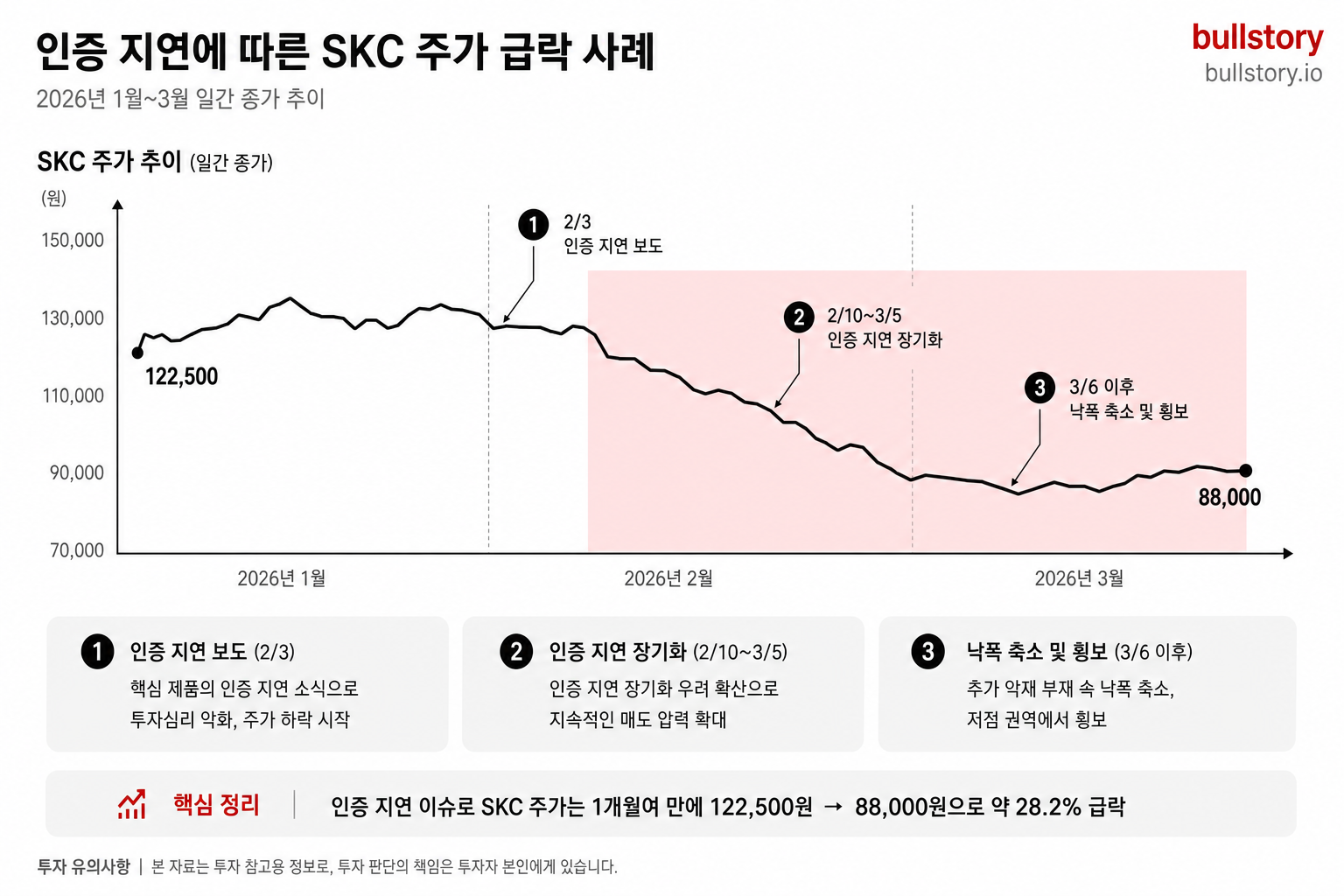
If technical validation takes longer, the mass-production timeline could be pushed back from the second half of to , and in that case there is a strong likelihood of disappointment selling. There is a real example. SKC’s share price 2026 after hitting 2027 and then turned downward at the end of the 1month. On 30the 122,500 dropped to 2.3month4 and fell to 88,000by the end of the month. The market reaction was fast and merciless.
The bigger problem is that this decline was not due to earnings. In the conference call, when the company could not present a clear mass-production deadline, it explained that "unexpected additional verification items have arisen, lengthening the development period," and as expectations wavered, the stock reacted immediately. Stocks that rise on expectations quickly give back those gains the moment those expectations disappear.
Financial pressure also adds to the burden. From 2026to 5 , a paid-in capital increase of 6won is expected to dilute shares by about 8,300%. If certification-failure news and the capital increase come together, the shock is amplified far beyond a simple sum.31.
| Shock factor | Details | Nature of stock-price impact |
|---|---|---|
| Delayed certification schedule disclosure | "Cannot set a due date" conference call | Sharp short-term drop (there is already a precedent) |
| Dilution from paid-in capital increase | 8,300won, expected share dilution of about 31% | Suppression of the medium-term share-price ceiling |
| Additional technical validation items arise | Unexpected process hurdles | Renewed uncertainty over the schedule |
| Competitors secure mass production first | Faster entry by later movers such as Samsung Electro-Mechanics | Erosion of the first-mover premium |
Equipment and materials stocks fall differently
Substrate makers (SKC) and equipment makers (Philoptics, HB Technology) fall by different amounts even under the same negative catalyst.
For substrate makers, revenue itself is directly tied to the start of mass production. If certification is delayed, no revenue appears at all. The impact is immediate and severe.
Equipment makers are different. Even at the pilot stage, equipment orders are possible, and Philoptics has both Appsolix and Samsung Electro-Mechanics as customers. Even if SKC is delayed again, results can be maintained if orders come from the Samsung Electro-Mechanics line. This structural difference creates downside resilience.
Materials and chemical stocks (Chemtronics, YC Chem) are similar. For names with a still-low share of materials dedicated to glass substrates, existing business revenue acts as a buffer, so even if theme-driven selling appears on news of production delays, the extent of earnings damage is smaller than for substrate makers.
So, FC-BGA substrate stocks are needed
As pointed out by Lee Yong of Hi Investment & Securities, if it is still too early to talk about profit contributions from the related supply chain, the reason experts recommend holding FC-BGA (flip chip ball grid array, the current mainstream packaging technology that connects CPUs and GPUs to substrates) substrate stocks in parallel becomes clear.
Isu Petasys and Daeduck Electronics are stocks that are seeing tangible benefits from AI infrastructure investment until glass substrates are commercialized. These are stocks with revenue coming in right now, explained by numbers rather than by expectations.
Isu Petasys reported 2025 consolidated sales for the year 1 trillion 880 hundred million won, and operating profit of 2,047 hundred million won. As investment in AI servers and networking infrastructure expanded, demand for high-layer-count PCBs increased, and customer demand broadened across the full range of AI accelerators, switches, and servers.
Daeduck Electronics is in the middle of an FC-BGA turnaround. Its structural strengths, with operations in memory package substrates, FC-BGA, and multilayer substrates, stand out, and 2026 operating profit for the year is forecast at 1,940 hundred million won.
How to mix and hold them
The logic behind holding both glass substrate-related stocks and FC-BGA substrate stocks is simple. The two deliver results at different times.
- FC-BGA substrate stocks (Isu Petasys·Daeduck Electronics): These are the names that are producing results now. They are less directly affected by news of delays in mass production of glass substrates. However, if the AI server investment cycle turns down, they can also weaken together.
- Glass substrate-related stocks (SKC·Philoptics, etc.): If news comes out that certification has been passed, a short-term surge is possible. Until then, expectations are what support the stock price, so it reacts extremely to news.
Holding both types together helps because, even if approval for the glass substrate is delayed again, the earnings news from FC-BGA substrate stocks supports the portfolio. Conversely, if approval passes, that upside can outweigh the slower-moving FC-BGA substrate stocks.
There is one criterion for setting the ratio. Put more weight on the side that is generating earnings right now, and keep the side sustained by expectations light. Expectations are always subject to renewed validation. SKC has already proved it three times.
Next are the three catalysts that actually change this calculation, that is, the disclosure events that separate buying now from 6buying after months.
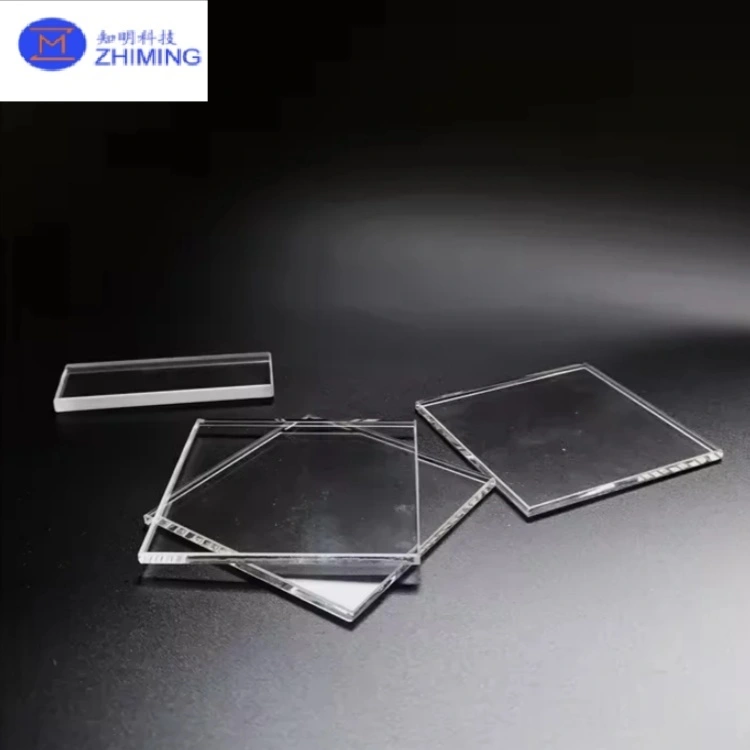
People buying now vs 6people waiting for months
Bottom line: Buying glass-substrate-related stocks now and 6months later are completely different bets. The person buying now is aiming for the event premium from approval, while the person waiting is trying to get on board safely after that event has been confirmed in practice. The returns of the two strategies differ depending on when and in what order the key catalysts 3types are triggered.
Catalysts that move the share price 3to the upside
In the glass substrate theme, the buy catalysts the market is waiting for are SKC Appsolix passing AMD and AWS quality certification, Samsung Electro-Mechanics finalizing its mass-production schedule, and the formal adoption of glass substrates by big tech such as Intel and Nvidia.
Catalyst ①: SKC Appsolix passes AMD and AWS quality certification
At present, Appsolix is in the final stage of glass substrate quality certification with AMD, AWS and others. Right now, it is at the stage of 'sending prototypes and being tested for reliability,' not a state in which a disclosure has been made saying that 'certification has been passed.'
Signals to watch in the short term are an upgrade in the customer certification stage, orders from equipment makers, and SKC yield data. Whether certification moves from the 'engineering sample test' stage to the 'letter of intent to purchase for mass production' stage can be confirmed in AMD and AWS earnings releases or supply chain trends.
2026In 5month, immediately after the U.S. government announced its glass substrate roadmap, reports of an "Intel·Apple alliance" were combined, and glass substrate theme stocks all hit their upper limits. SKC rose +30.0%, and HB Technology rose +29.89%. If AMD certification is actually confirmed through a disclosure, the impact could be even greater.
Catalyst ②: Samsung Electro-Mechanics confirms mass-production schedule
Samsung Electro-Mechanics, which moved its development organization at the research center forward into the Package Solution Division, has laid the groundwork to begin full-scale large-scale mass production 2026from the second half of 2027to between and . The organizational restructuring is done, and what remains is the final announcement.
2025At the earnings conference call in 2026year, there was a statement to the effect that it would "build the glass substrate supply chain early and start timely mass production in line with the requirements of key customers with whom it is collaborating, in order to pursue market preemption." If the mass-production schedule is pulled forward to the second half of the year, Samsung Electro-Mechanics could have a standalone catalyst, and Chemtronics and YCChem, tied into the supply chain, are also likely to show synchronized strength.
Catalyst ③: Big Tech's official hiring announcement
Amid ongoing prototype performance verification with AMD, NVIDIA, and others, the moment when Big Tech officially announces that it will use glass substrates in its next-generation chips is an event that raises the level of the entire theme. It has greater ripple effects than certification approval or a mass-production schedule announcement, but it is also that much harder to predict.
Timing by catalyst and related beneficiary stocks
| Catalyst | Expected timing | 1secondary beneficiary | 2secondary beneficiary |
|---|---|---|---|
| SKC Absolix AMD·AWS certification passed | 2026the second half of the year | SKC | Philoptics·WYChem |
| Samsung Electro-Mechanics mass-production schedule confirmed | 2026the second half of the year~2027the following year | Samsung Electro-Mechanics | Kemtronics·Gigavis |
| Big Tech (Intel·NVIDIA) official hiring | 2027the following year and after | the whole theme | all materials and equipment stocks |
Logic of those buying now
The basis for the side buying now is that "if you wait for the certification-pass event and then buy, it is already too late." Before and after this event, supply-chain stocks such as Philoptics·HB Technology·WYChem repeatedly surged together.
The risk is clear as well. The commercialization schedule for glass substrates has already been delayed by 3 years. The originally planned 2024 year 6month timeline was pushed back to ‘2025 year mass production,’ and then again to ‘2026 year certification completed’ because of delays in plant completion. Anyone buying now is taking on the risk of this repeated delay.
6The logic of those who wait for months
Those who wait enter only after confirming with their own eyes that certification has passed. They may buy at a higher price, but they avoid the disappointment risk.
The stocks for which this strategy is most effective are Philoptics and WiseChem. Equipment companies tend to generate earnings earlier than materials companies, so even after an announcement of certification approval, there are periods when equipment orders keep coming one after another. Entering during that period still leaves enough room to make a profit.
By contrast, SKC is different. There is analysis that, when AMD, AWS, and Intel reliability certifications are passed, the stock can be valued at several times earnings, with the multiple potentially being raised from 28 times to 35 times. If the re-rating of the multiple is already reflected in the rise after the certification approval announcement, then entering after confirmation means getting in substantially late. SKC is a stock for which a waiting strategy is disadvantageous.
Conclusion: Use different strategies for each stock
- SKC: Enter now, but keep the position small. The certification event itself is the biggest upside catalyst, so waiting could mean missing the opportunity, but given the history of delays, it is reasonable to limit it to a small share of your overall portfolio.
- Philoptics·YC Chem: It is not too late to enter after the certification pass announcement. Once materials enter the supply chain, switching costs are high, so repeated revenue can be expected over the long term.
- Samsung Electro-Mechanics: Its schedule is slower than SKC's. Backed by Samsung Group, it has strong financial capacity, and it is developing glass core materials in cooperation with Sumitomo Chemical, aiming for mass production after that. Financial risk is low, but earnings recognition will come later, so it is better to go in after news confirms the mass-production schedule.10.2027.
“Buying first is how you make money” is not always true in this theme. If you buy everything at once, you end up having bought half too expensively, while nervously holding the names that could have waited.
Appendix: Glossary
The key terms that appear in the main text 7 are numerous. There are so many industry terms—enough that a single glass-substrate manufacturing process can involve as many as 190 detailed steps—that it is easy to get confused. Read the explanations below once, and the main text will become much clearer.
-
Glass Core (Glass Core): The layer that serves as the backbone in the middle of a semiconductor substrate is called the "core." In existing FC-BGA, this core is made by mixing glass fiber and resin, and its properties are close to plastic. A glass core substrate is one in which this plastic core is replaced with glass.
-
TGV (Through Glass Via, glass-through electrode): a tiny hole made by drilling vertically through a glass substrate to transmit electrical signals. After drilling the hole, it is filled with copper and used as a signal path. You can think of it as millions of wire holes drilled into a glass panel. Laser processing, etching, and cleaning come first, followed by plating, polishing, and inspection.
-
FC-BGA (Flip Chip-Ball Grid Array): a term combining flip chip and ball grid array. It is currently the most widely used substrate type for high-performance semiconductor packaging, and it is the counterpart that glass substrates aim to replace. Because of low thermal durability, warpage occurs and it is also difficult to increase the size, so the need for glass substrates has been raised because of these limitations.
-
Pilot Line: a line for trial production on a small scale before full-scale mass production. It is a stage for verifying yield (the rate at which products are made properly) and resolving process issues, and the products made here are used in customer quality certification tests. The pilot-line stage has almost no sales, so even from the perspective of equipment stocks it is only a matter of small-volume supply, and it is a period in which investors should not raise sales expectations excessively.
-
EBITDA (earnings before interest, taxes, depreciation, and amortization): profit earned before subtracting interest expense, taxes, and depreciation of tangible assets. It is an indicator for seeing how much cash remains from actual operations, excluding the money spent on building factories, and it is often used in the glass substrate industry, where initial facility investment is enormous.
-
Interposer (Interposer):2.5 in semiconductor 3D packaging, it is a component that acts as an intermediate bridge. It adjusts the circuit width between the chip and the package substrate and connects multiple semiconductor dies to maintain signal flow. It was previously made of silicon, but glass substrate companies are trying to replace this silicon interposer with glass as well.
-
Glass core vs. glass interposer: these two terms are often used interchangeably, but they are strictly different. A glass core substrate means making the package substrate itself out of glass instead of organic material, while a glass interposer means making the intermediate connection material inserted between the chip and the substrate out of glass. The difficulty is higher for glass core substrates, and mass production is also expected to come later.
Frequently asked questions
Among glass substrate-related stocks, which one posts earnings first?
Philoptics. It has already supplied TGV laser equipment to Absolix and Samsung Electro-Mechanics, and as of , operating profit surged sharply compared with the same period last year.2025in 3month 348.5.
When might SKC’s glass substrate mass production be possible?
2026As of 1month, Absolics is supplying mass-production samples to AMD. Once a disclosure is issued saying that AMD and AWS quality certification has been passed, full-scale mass production will begin.
What is the status of Samsung Electro-Mechanics’ glass substrate business?
2026In 7month, a joint venture, GlaSSEM, was established with Dongwoo Fine-Chem. The total investment scale is 4,800billion won, and 2027the goal is to begin full-scale operation in the second half of the year.
When is the best time to buy glass substrate-related stocks?
2026to 2027year is the certification stage, 2027to 2028year is full-scale mass production. Because the timing of revenue recognition differs by as much as 1to 2year by stock, you should identify each company’s current stage of progress before entering.
Why is glass substrates replacing plastic?
Plastic substrates have hit physical limits for use in AI GPUs and HBM. Glass substrates offer far superior heat dissipation and signal quality, making them the only alternative candidate.
How large could the glass substrate market growth rate be?
According to SEMI projections, 2028if mass production begins around 67.2the annual average growth rate could reach %. The opening of the market itself is close to a foregone conclusion.